sync up, set out.

Resume

Component ideation

Scope

14 weeks

Individual Project

Course

Visual IxD 2,

ArtCenter College of Design

Skills learned & applied

Prototyping, Branding,

UX Research, UX Strategy

Group have a hard time making trips happen because it’s tricky to gather suggestions, get consensus, and plan for logistics as a group. Existing tools allow for more seamless travel planning are geared toward single and couple travelers or toward sharing travel information in one place. But they don’t tailor to the moving dynamic of a group — with combinations of different preferences, communication styles and travel styles — when they’re planning a trip together.

The Problem I Set Out to Solve

Product

01

Eunite is a group travel planning and tracking platform that tailors to groups, that means suggesting, considering and making decisions together. With Eunite, groups continue the momentum and make their trips come true.

Group suggestions

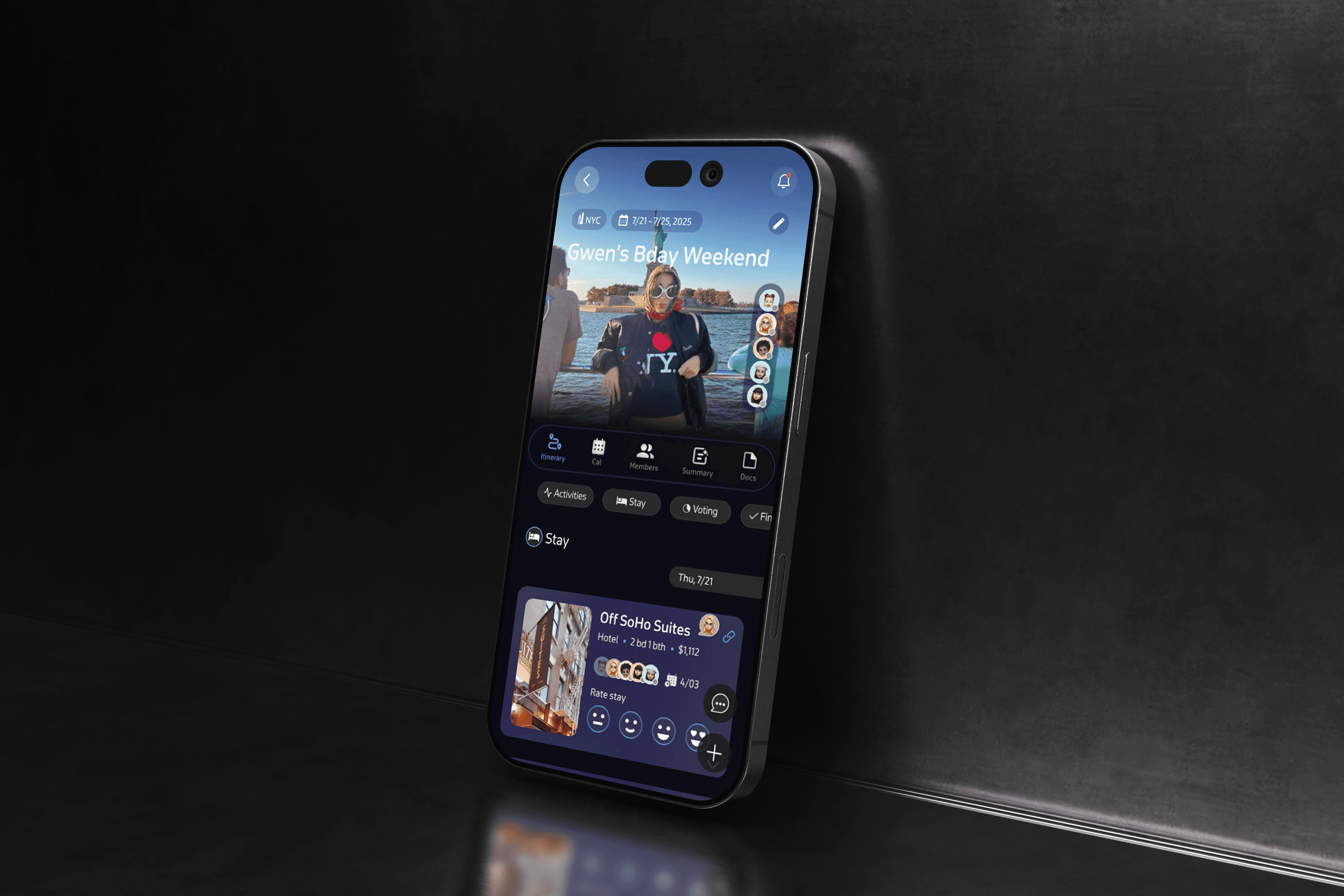
Member can add activity and stay suggestions for others to rate and collaborate on building the itinerary

Planning convo summary + update

AI tool listens and summarizes real-time planning convo, and updates in group itinerary

Group availability syncing

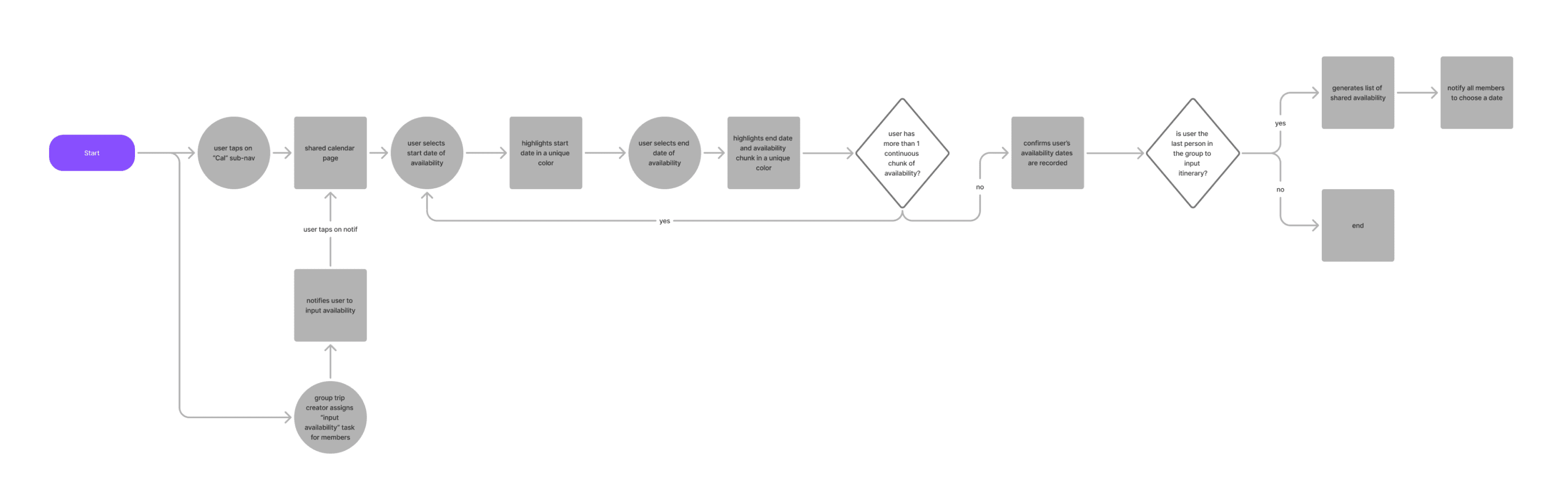
Group members input their availability, the system figures out the rest

High-priority tasks assignment

Assign important tasks (inputting budget, availability, and travel profiles) to move the plan forward

Real time group alert

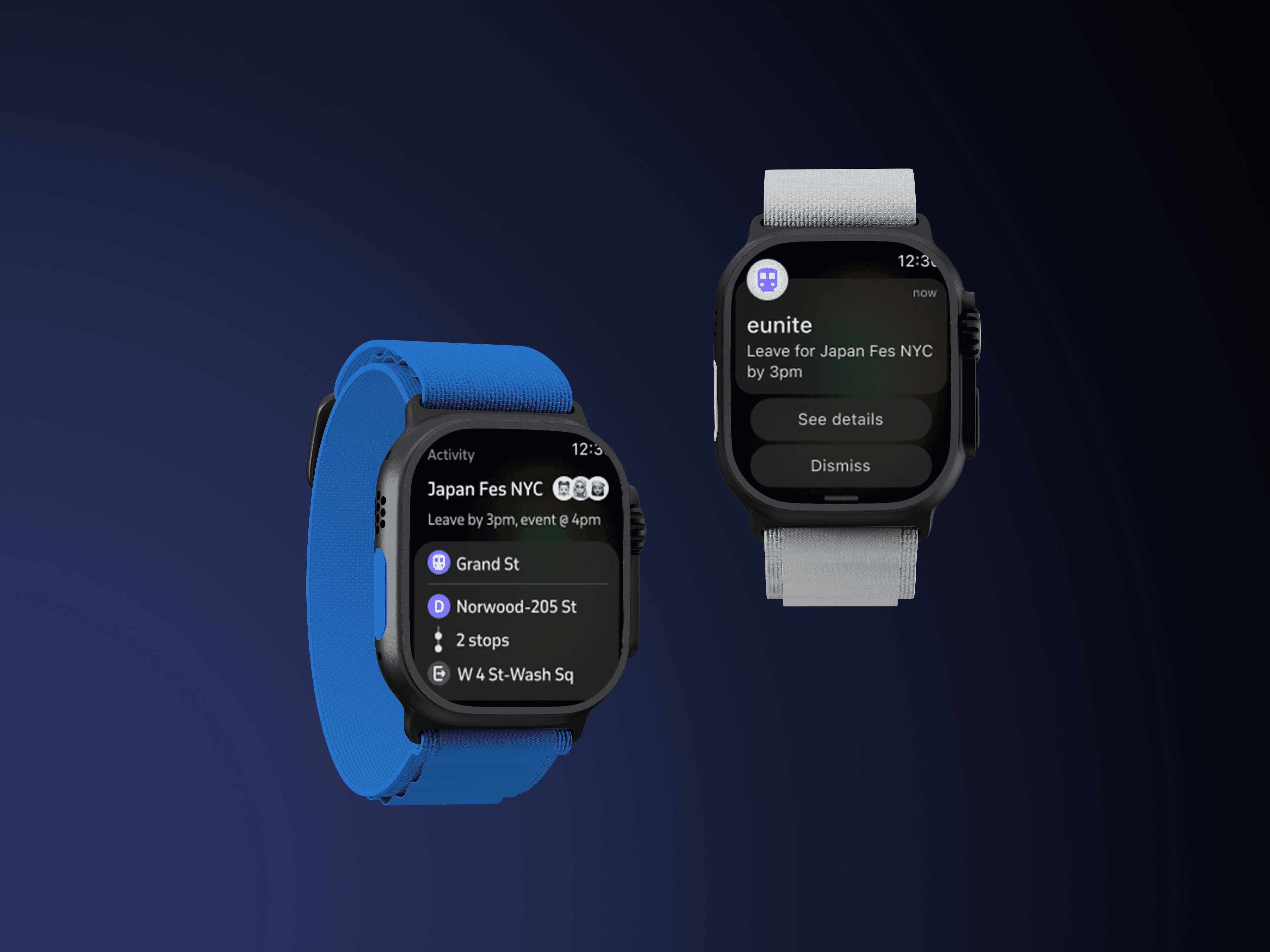
Eunite notifies group when to leave for a planned activity, and remind group who will be coming

Transportation plan for activity

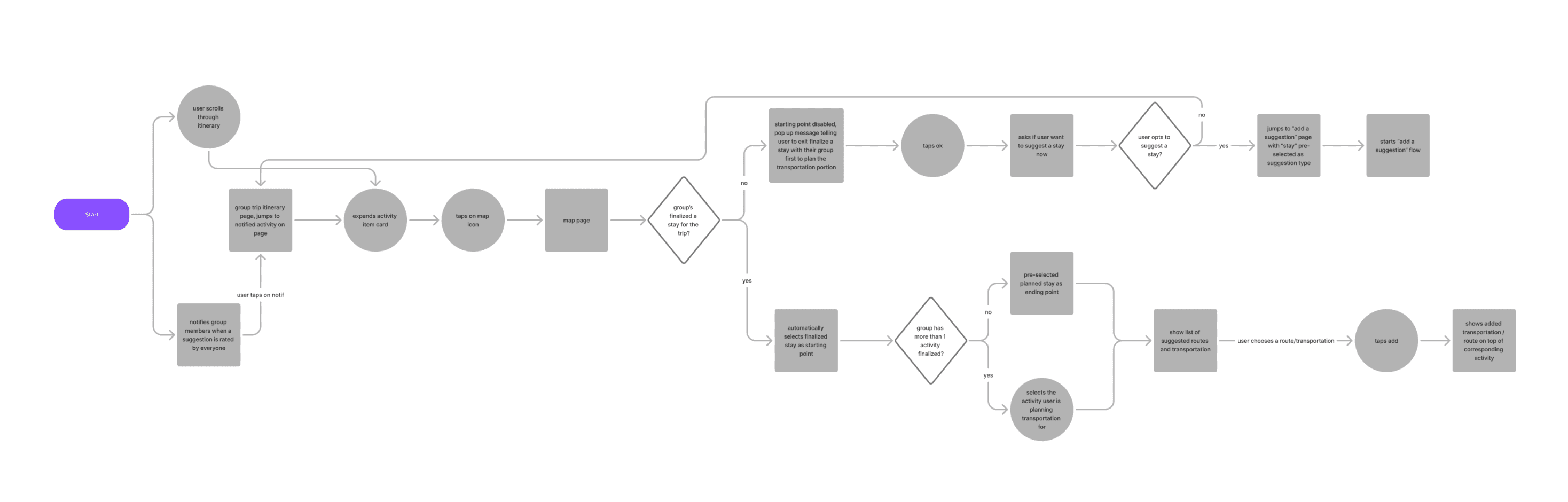
Add a transportation plan between itinerary items for ease of transport and time management for the group

Key features

Purpose

Groups are splurging on “celebration travels” such as milestone birthdays, bachelorette parties and destination weddings. Travelers in general are planning trips around sports, music events and adventure activities.

Reward

People go on group trips because they want to foster a deeper relationship with their friends and family by spending quality time and experiencing the world together.

Opportunity

Groups are spending more on travel, traveling more frequently, and becoming significantly smaller in size. Gen Z tends to opt for shorter adventures but more of them. Small groups expect a more flexible and unique itinerary.

Travel trends

/

/

Serendipitous

Energized

Refined

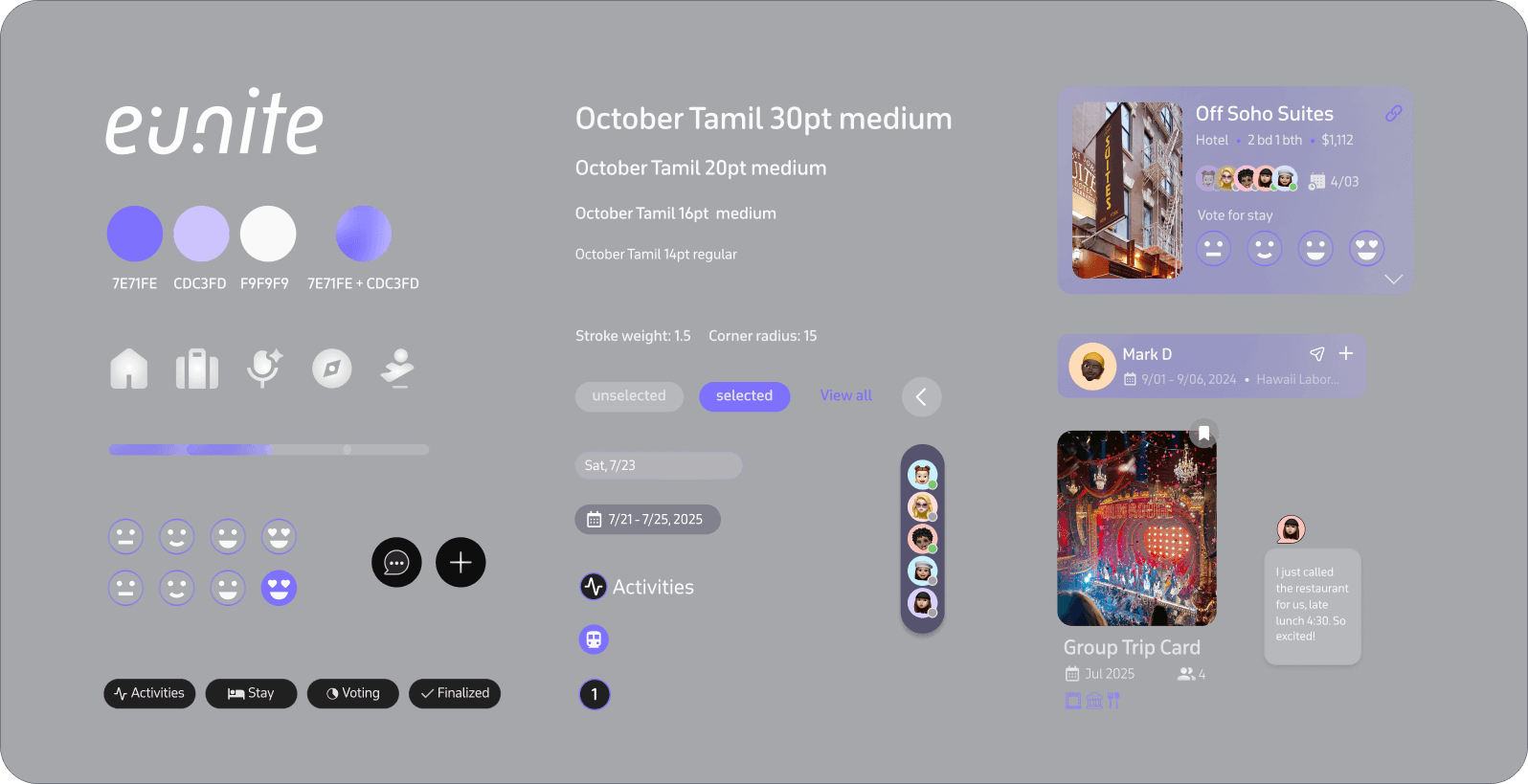
Capitalizing on my guidewords “energized” and “serendipitous”, I created a visual language that represents that tingly feeling when you’re exploring and hanging out with your friends in a brand new city in your 20’s. I shy away from blue tones that typically represent travel and appeal to a wider demographic, and brought in a cloud-like texture for a flowy feel. Dark background pairs with vibrant purple helps communicate that excitement and serendipity while making photo content pop.

Research

02

There’s a mountain of logistics a group has to navigate through such as budget, scheduling and building an itinerary while also researching flights, accommodation, transportation and activities. Doing this while balancing needs, preferences and personalities is incredibly overwhelming for people who already have to balance their daily life and work/school.

With a market in mind to dive deeper, I created a working hypothesis then researched to validate it.

Why is a solution for group travel needed?

User research

2 Expert Interviews

4 Conversations

14 Surveys

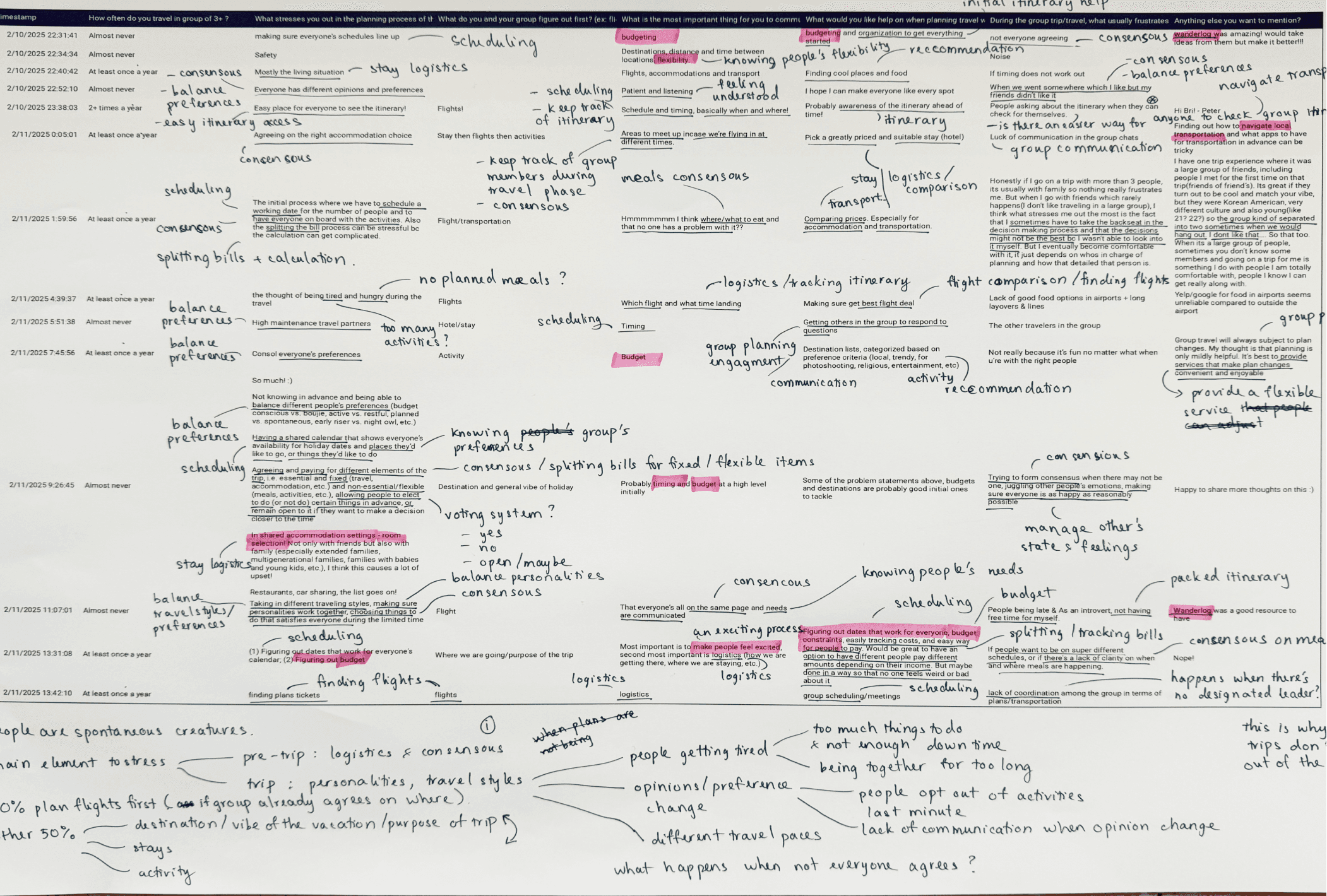
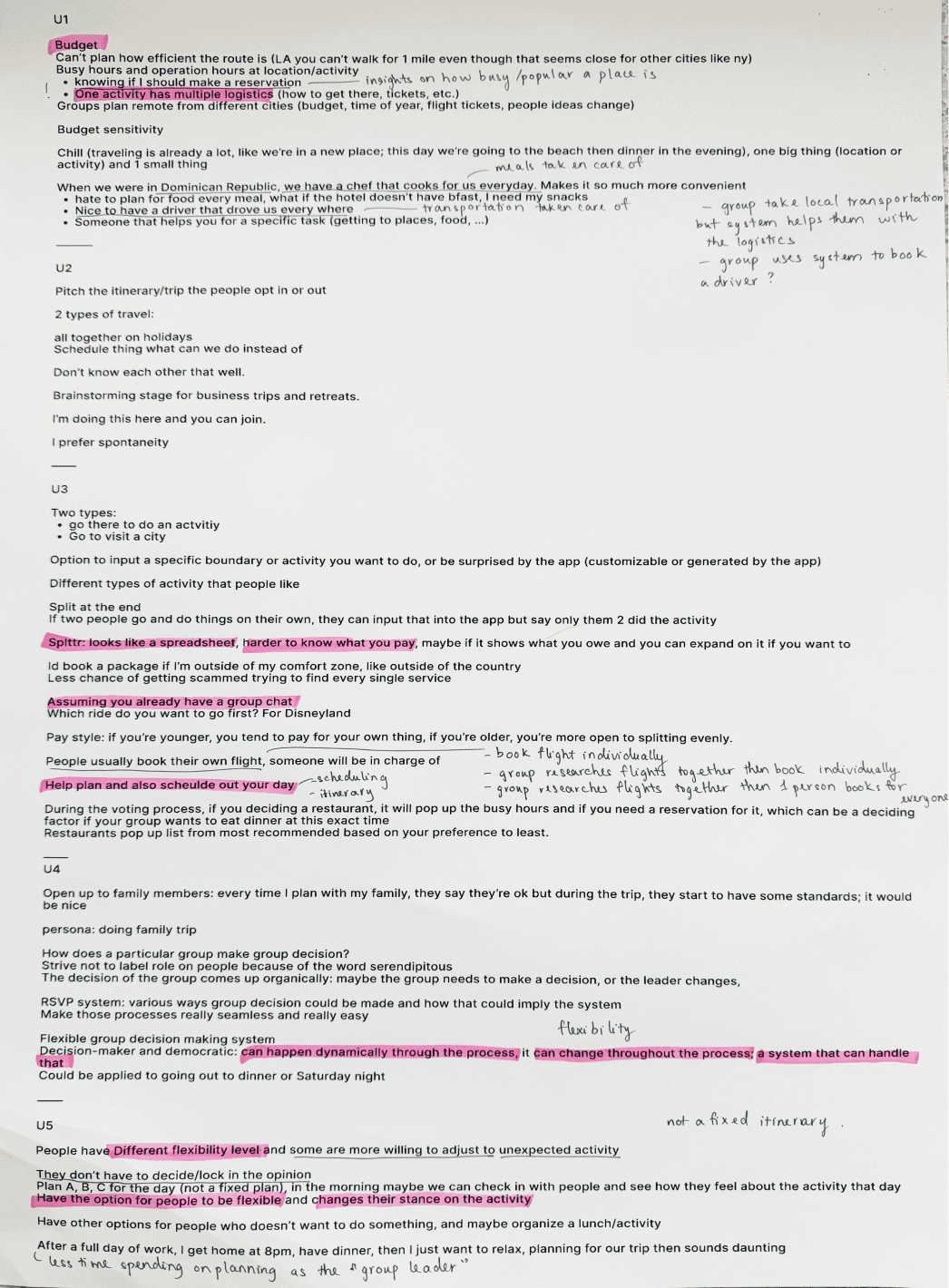
After expert interviews and friend conversations, I felt that I still needed to understand the group pain points more deeply in order to ideate effective solutions. So I sent out a survey, then synthesized all my learnings.

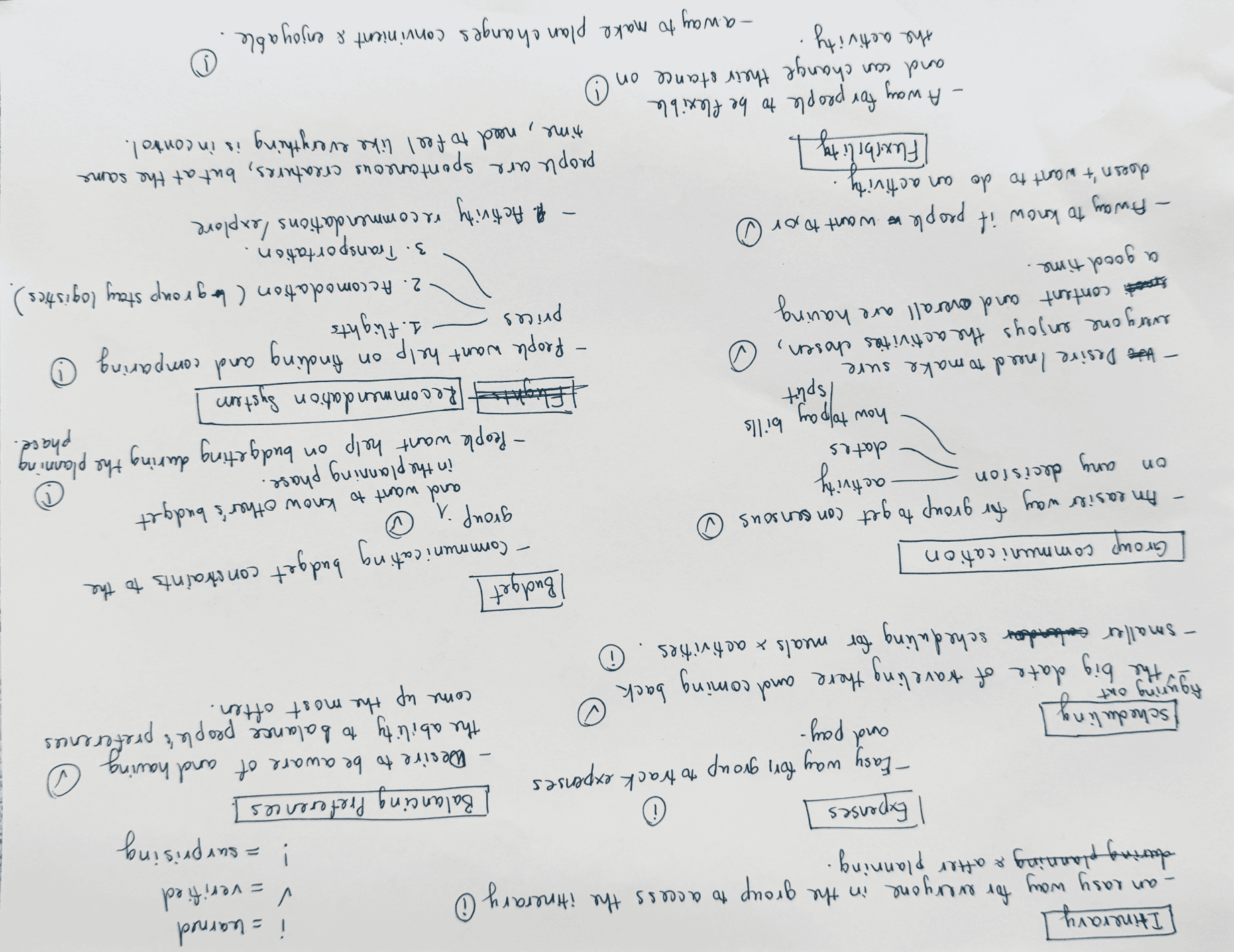
I learned:

People want to easily access the itinerary and see what’s being and has been considered.

Be updated with group members’ whereabouts, meetup location/time during trip.

One activity has multiple logistics (tickets, how to get there, what to see/eat/do, etc.)

Most groups figure out stay first and flights first.

Before trip, people want to figure the logistics, be aware of everyone’s preferences, and be able to get consensus among each other.


During the trip, there are a variety of travel styles and personalities in a group. Some people also want to be informed if the group breaks off and be on different schedules.

People want a way to track and pay for group’s expenses.

I verified:

People want an easy way to communicate their budget constraints and know other’s budget in the planning phase.

They want different ways to split expenses, including splitting paying responsibility based on people’s income.

They want an easier way to figure out group’s schedule for flights, stays, and activities.

An easier way for the group to get consensus on any decision (getting dates, choosing and booking activities, how to split and pay bills).


They also want to know:


If people in the group wants to or don’t want to do something.

Group’s needs and preferences.

To be able to balance preferences.

To know or be able to check in with group: Do they like the activity? Are they having a good time?

I was surprised that:

People want help with finding and comparing prices: flights, accommodation, and transportation.

Help with finding restaurants and activities and navigating local transportation and transportation app.

They want the ability to be flexible and change their stance on a decision.

A way to make group plan changes more convenient.

Help on budgeting with their group during the planning phase.

Budget / Expense

Scheduling

Consensus / Transparency

Itinerary

Logistics

Stress factors

Flexibility

Recommendation System

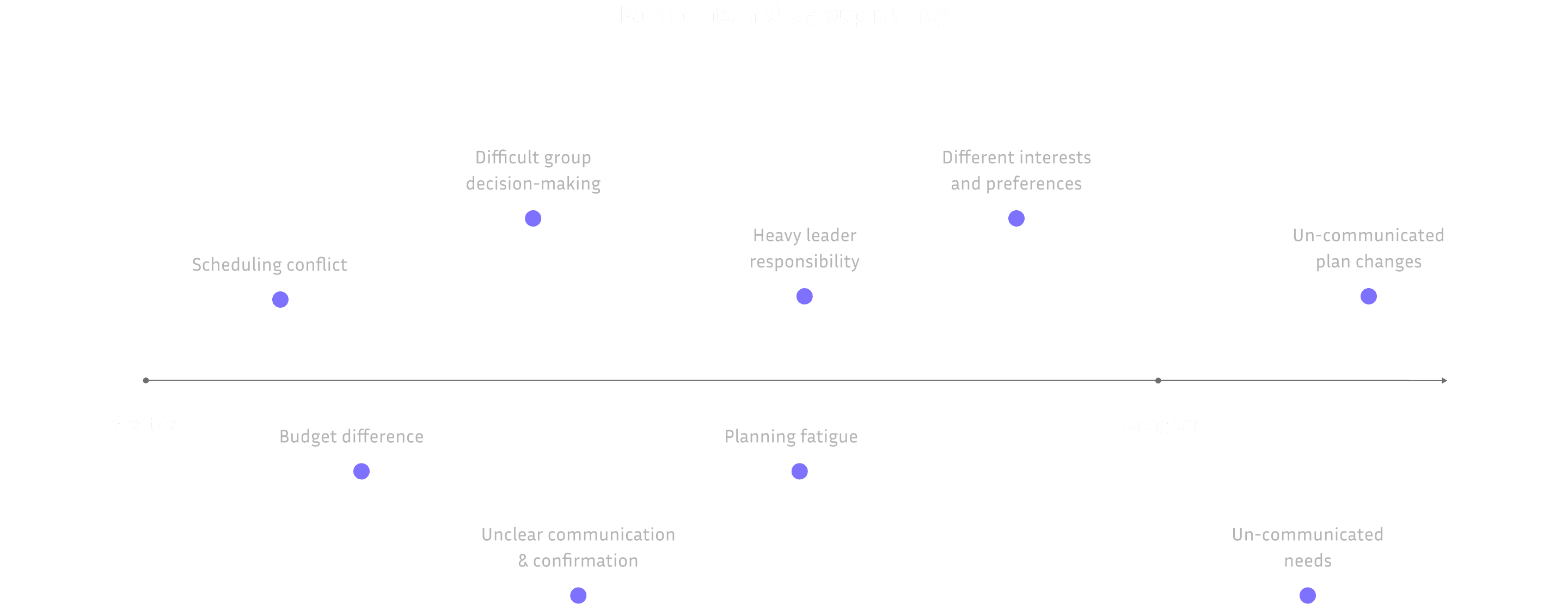
Pre-trip

During trip

Planning fatigue

Scheduling conflict

Budget difference

Difficult group

decision-making

Unclear communication

& confirmation

Heavy leader

responsibility

Un-communicated

needs

Un-communicated plan changes

Different interests

and preferences

Pain points in the group journey

Positioning matrix

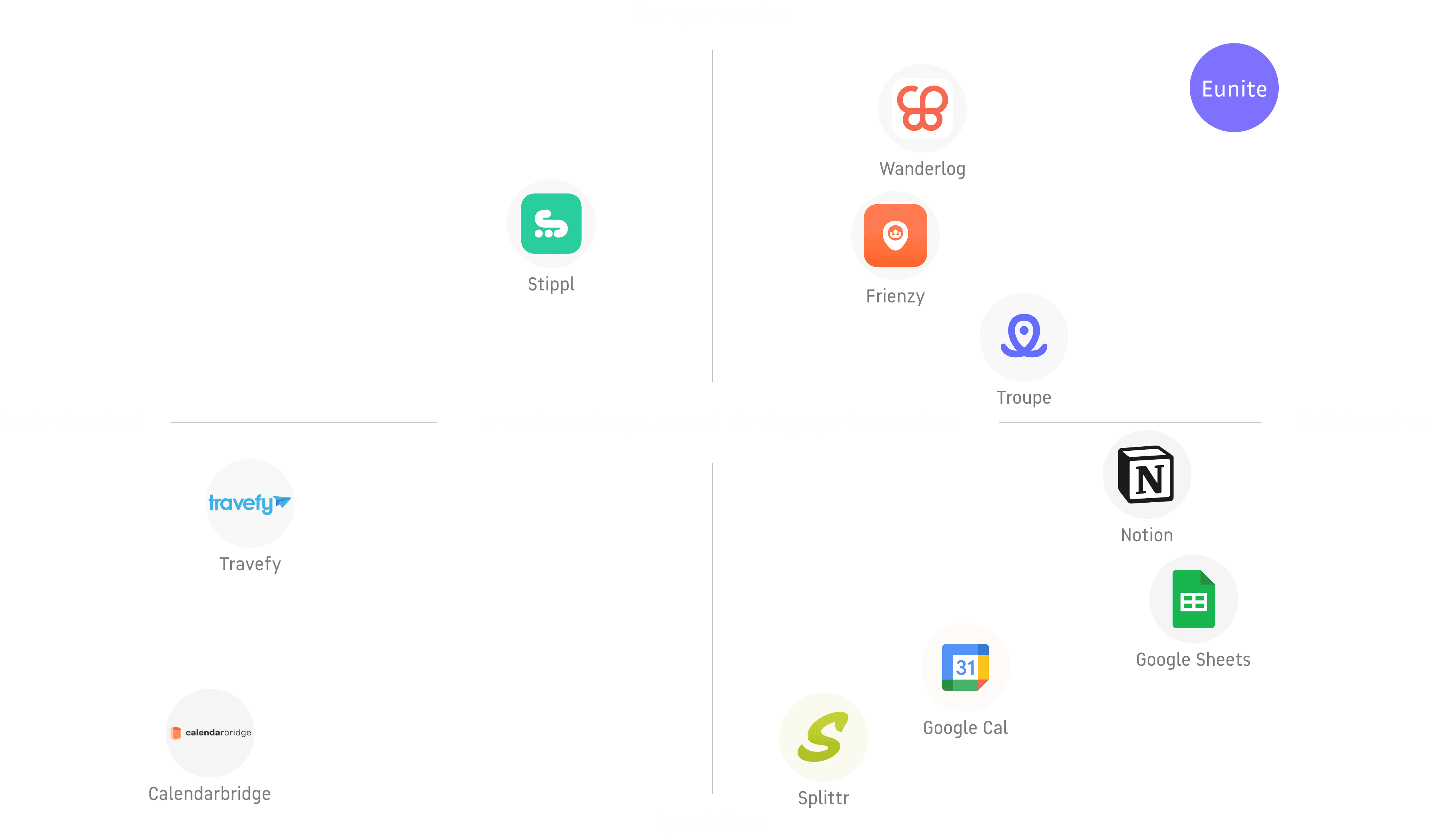
What’s on the market? What are they doing well and what is missing? How can Eunite solve the group trip planning problem coming from a unique position?

Insights from user research showed needs for a more collaborative and transparent group travel planning environment with help on calendar syncing and expense tracking with their group. I conducted competitive analysis focused on existing tools for travel planning, group travel planning, calendar syncing and expense tracking. And used the positioning matrix to solidify how Eunite can stand out in the market.

User definition

03

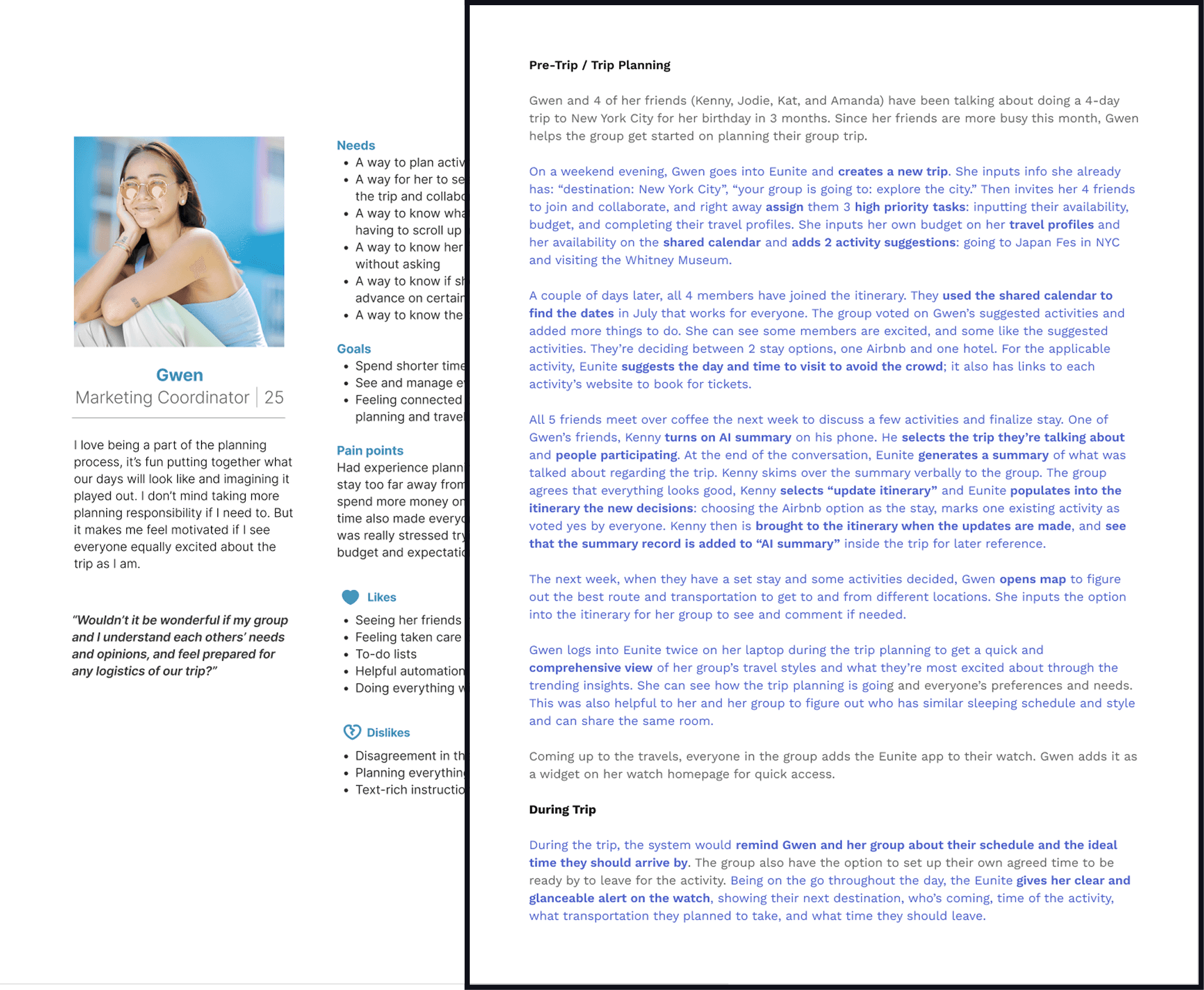
Personas

I saw 3 types of personas surfaced as I learned about people’s needs, preferences, and frustrations traveling in groups: The Group Leader – the one who pushes the plan forward, The Feel Good friend – they want to get along with everyone, and The Go with the Flow – they just show up. They can also be categorized based on how much involvement they have in the travel planning process, which ties to how much time they would spend on the platform.

June

Graphic Designer

Involvement level in the planning process: high

Gwen

Marketing Student

Involvement level in the planning process: medium

Mike

Sport Instructor

Involvement level in the planning process: low

User goals — the type of platform that we should offer our users:

Collaborative

Everyone in the group has equal weights in the planning and decision-making process, and feel like they’re working together toward a common goal

Transparent

Group members feel encouraged and safe to be transparent about their budget, preferences, and opinions while offering the same attitude in reverse

Comprehensive

A space that offers what a group needs to get inspired, plan for the trip and keep track of the itinerary

Rewarding

Actions throughout the platform feel rewarding, fun, and help encourage collaboration

Side note on persona

Gwen is someone whose ideal scenario is sharing equal planning loads with her friends and having fun while doing it. This goal and personality set up the right challenge to design Eunite. With the limited project timeline, I dived deeper into Gwen and her use case scenarios to ideate features and user flows while still considering June and Mike’s goals. I divided Gwen’s use case scenario into 2 stages (pre-trip and during trip).

During the persona stage, I did a posture exercise, which looked at what our personas did in their during moments they would use the platform. This helped me get started on ideating the right features and actions that would make sense for my users.

Home

Moving

Ideation

04

Jobs-to-be-done

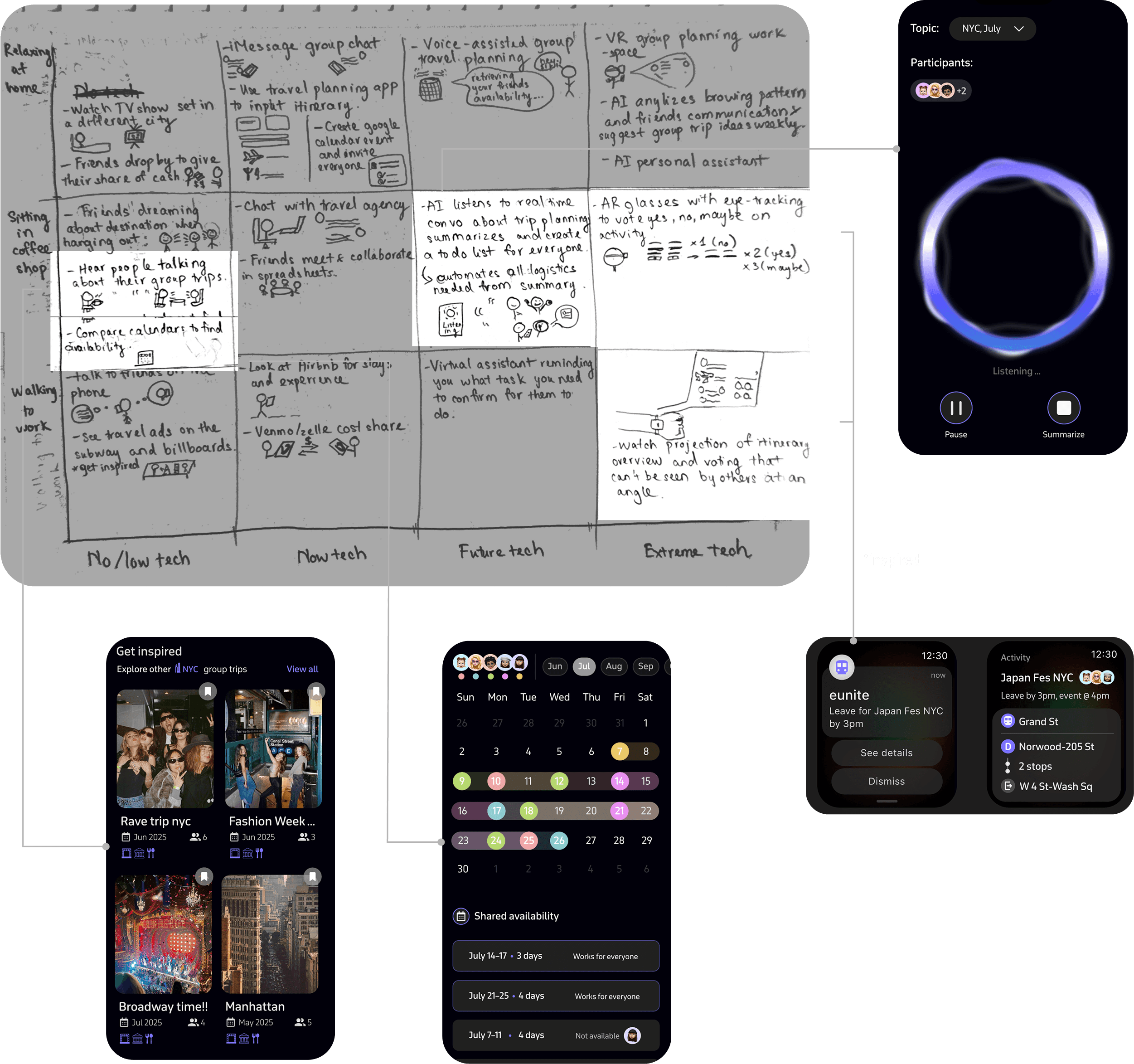
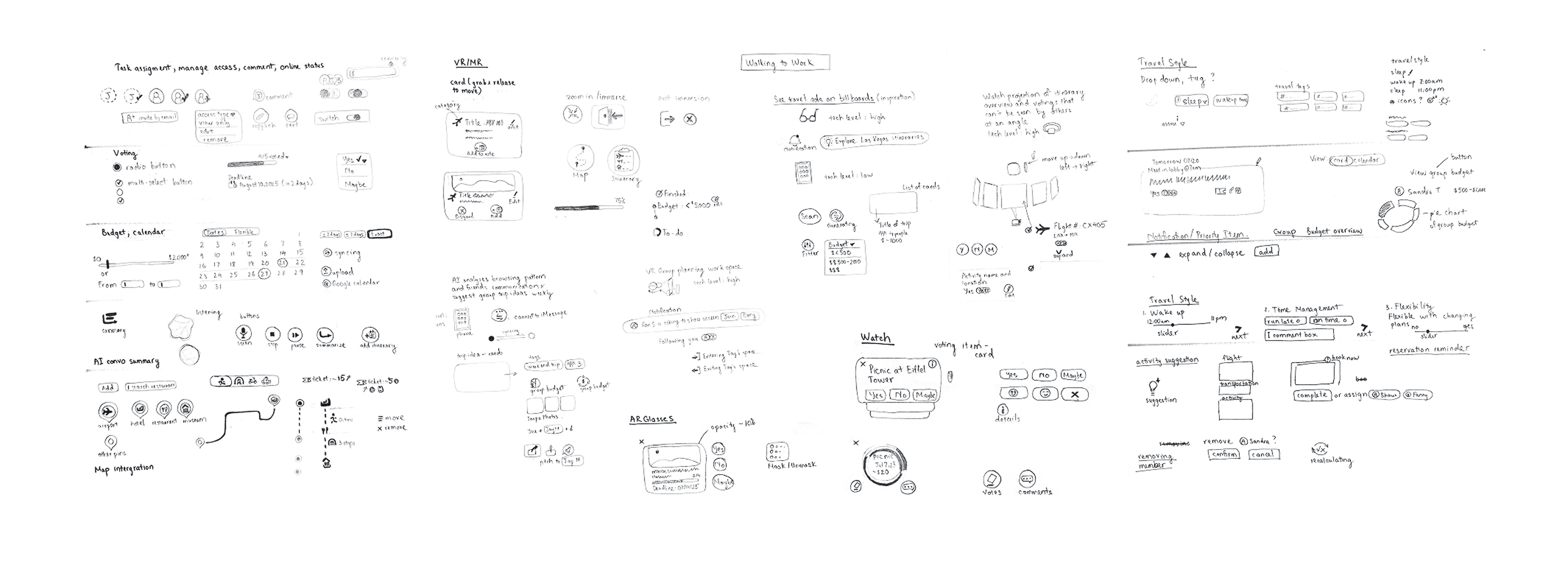
There are 3 touch point moments: relaxing at home — most time and attention for the platform, sitting in the coffee shop — some level of multitasking and lower attention span, and walking to work — fastest touch point and lowest time and attention. I took those 3 moments and combined them with a variety of technology levels to uncover jobs to be done and brainstorm unique solutions for group travel planning. This also helped me think about the device that were the most fitting for that use case.
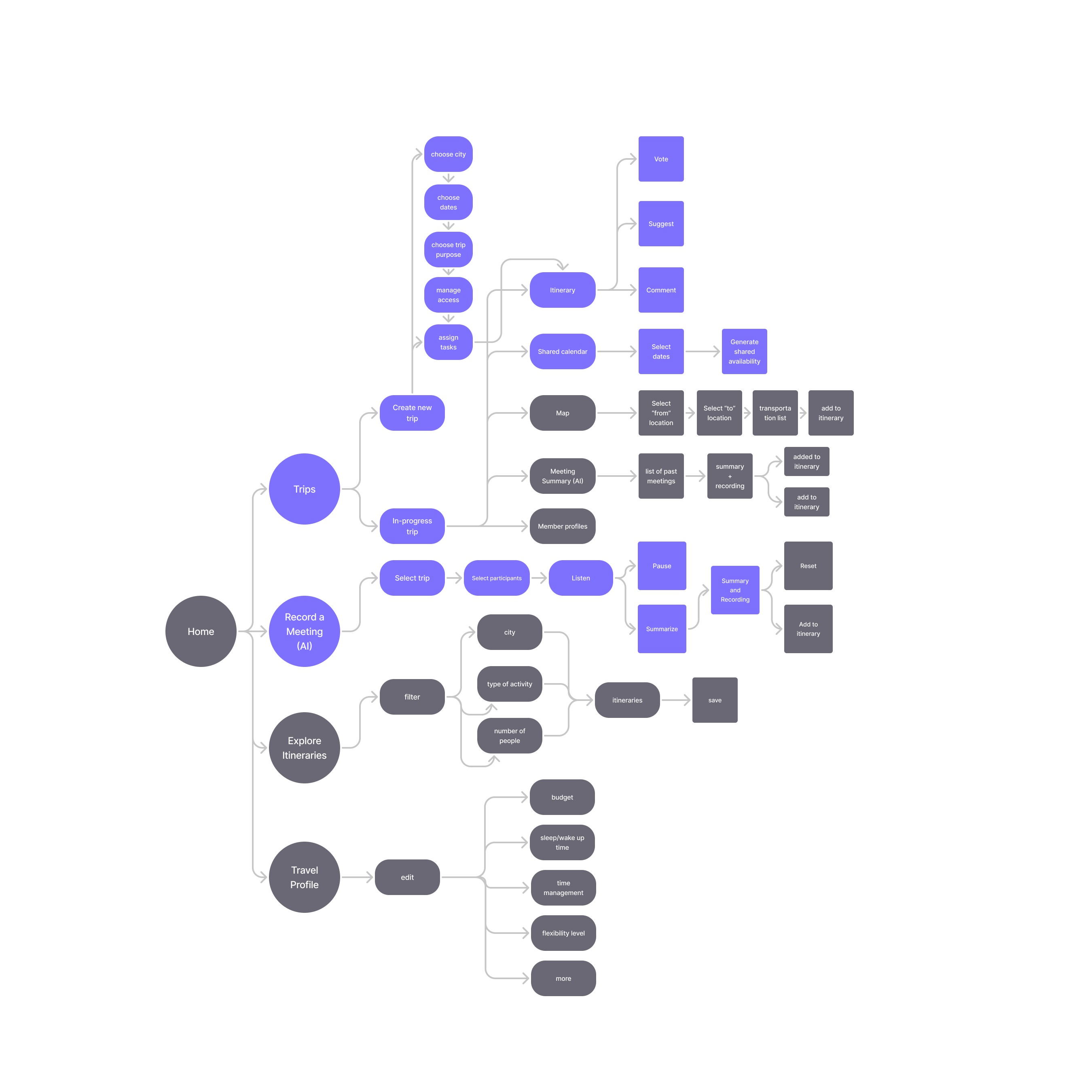
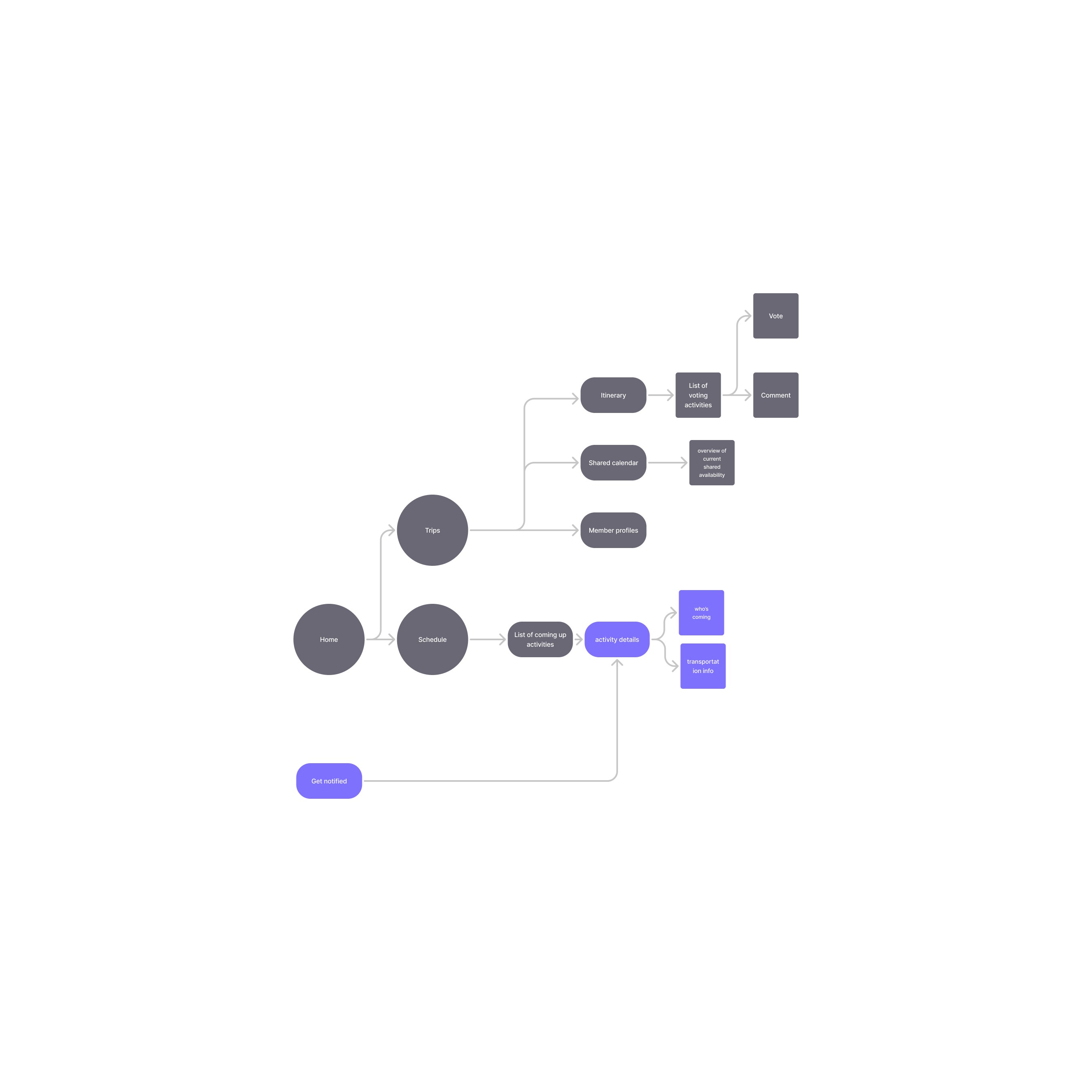
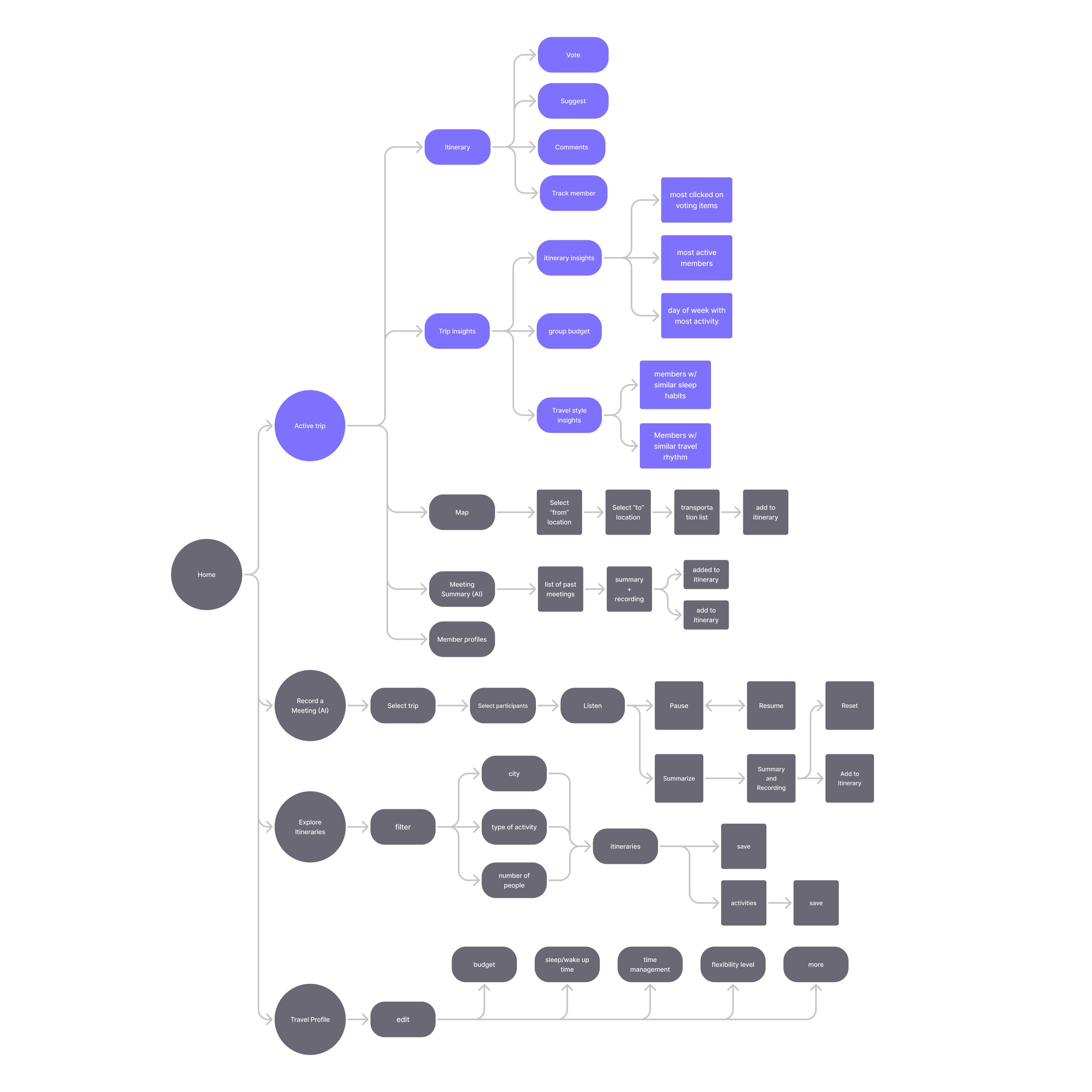
Sitemaps

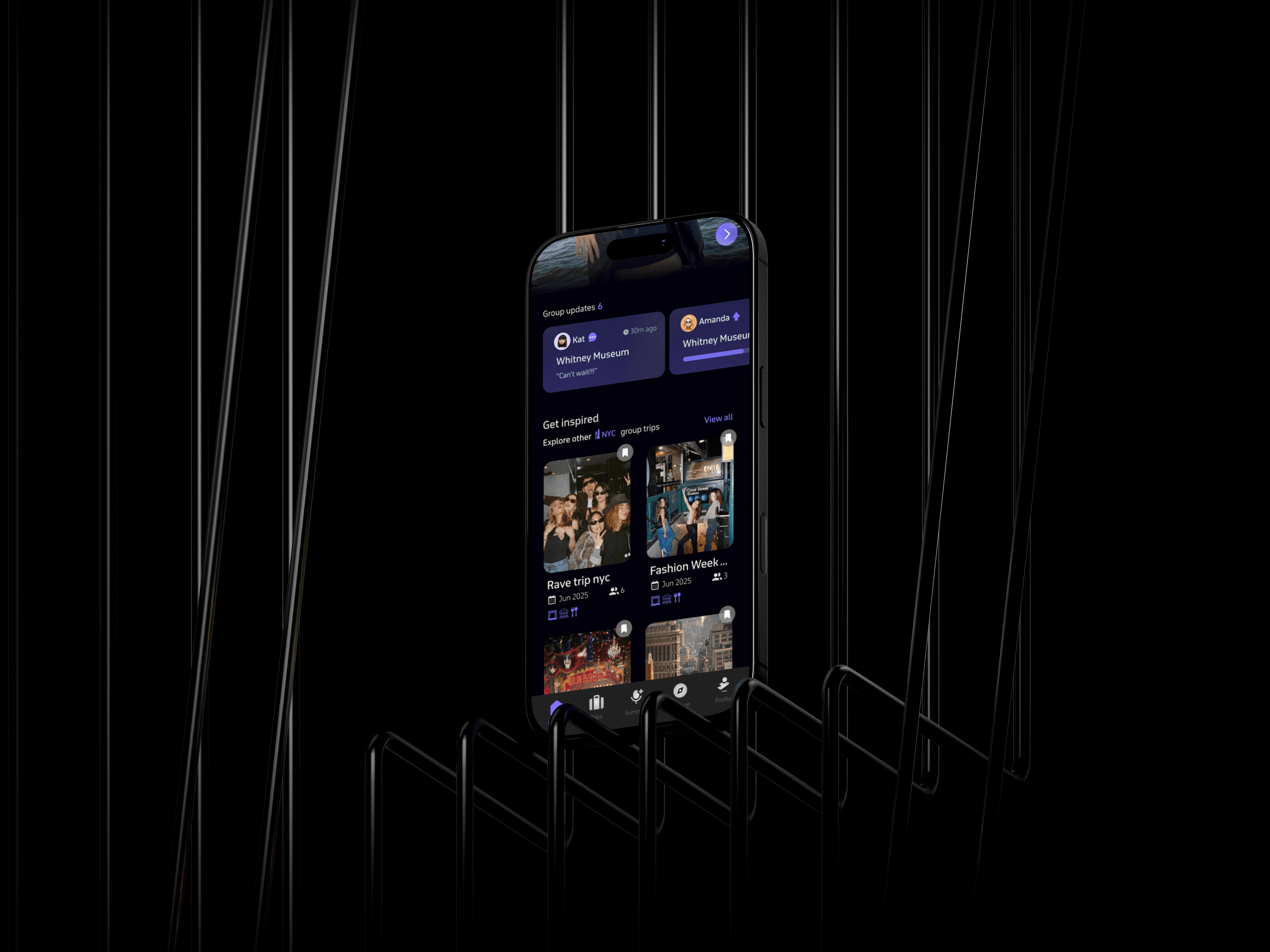
Mobile

Watch

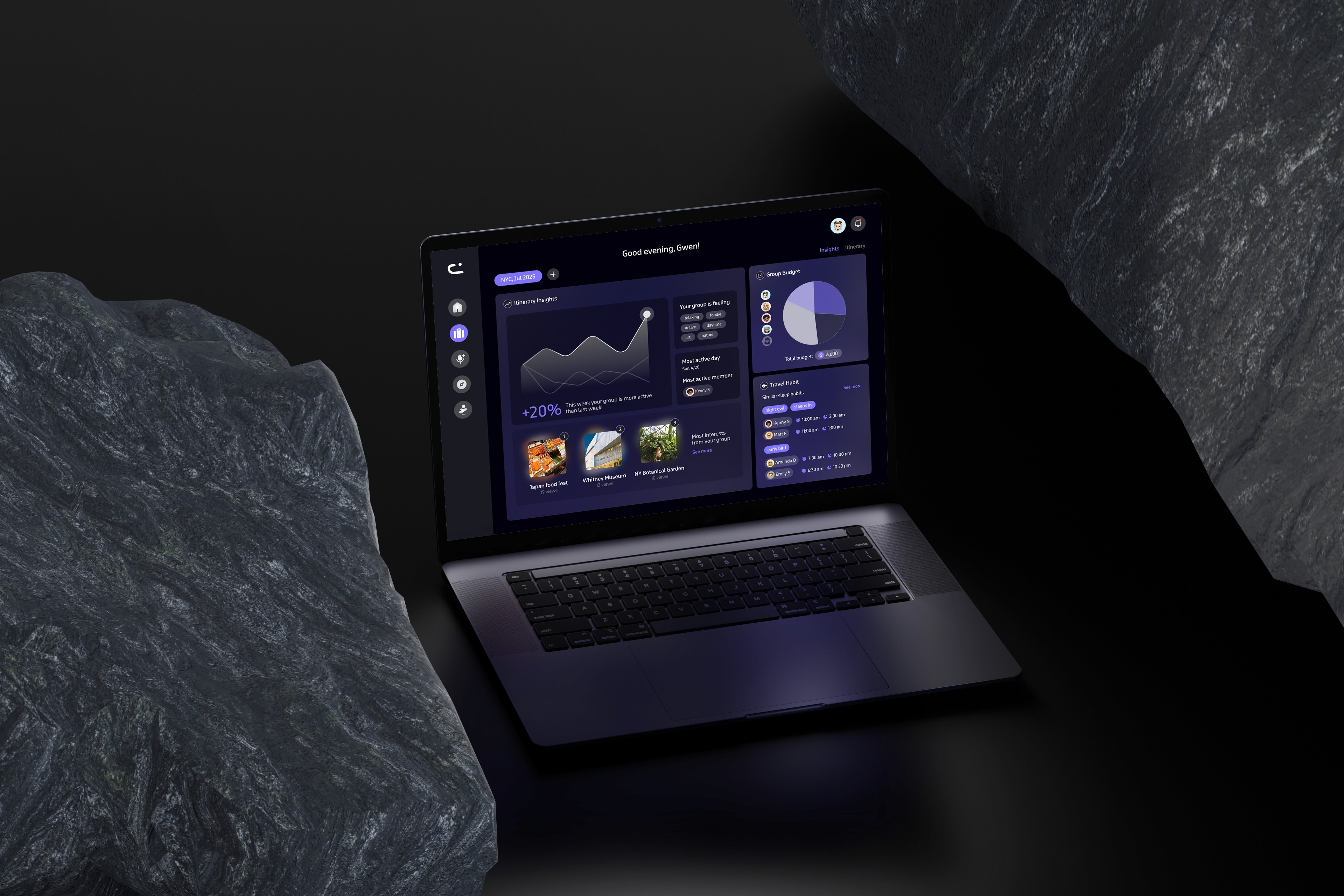
Laptop

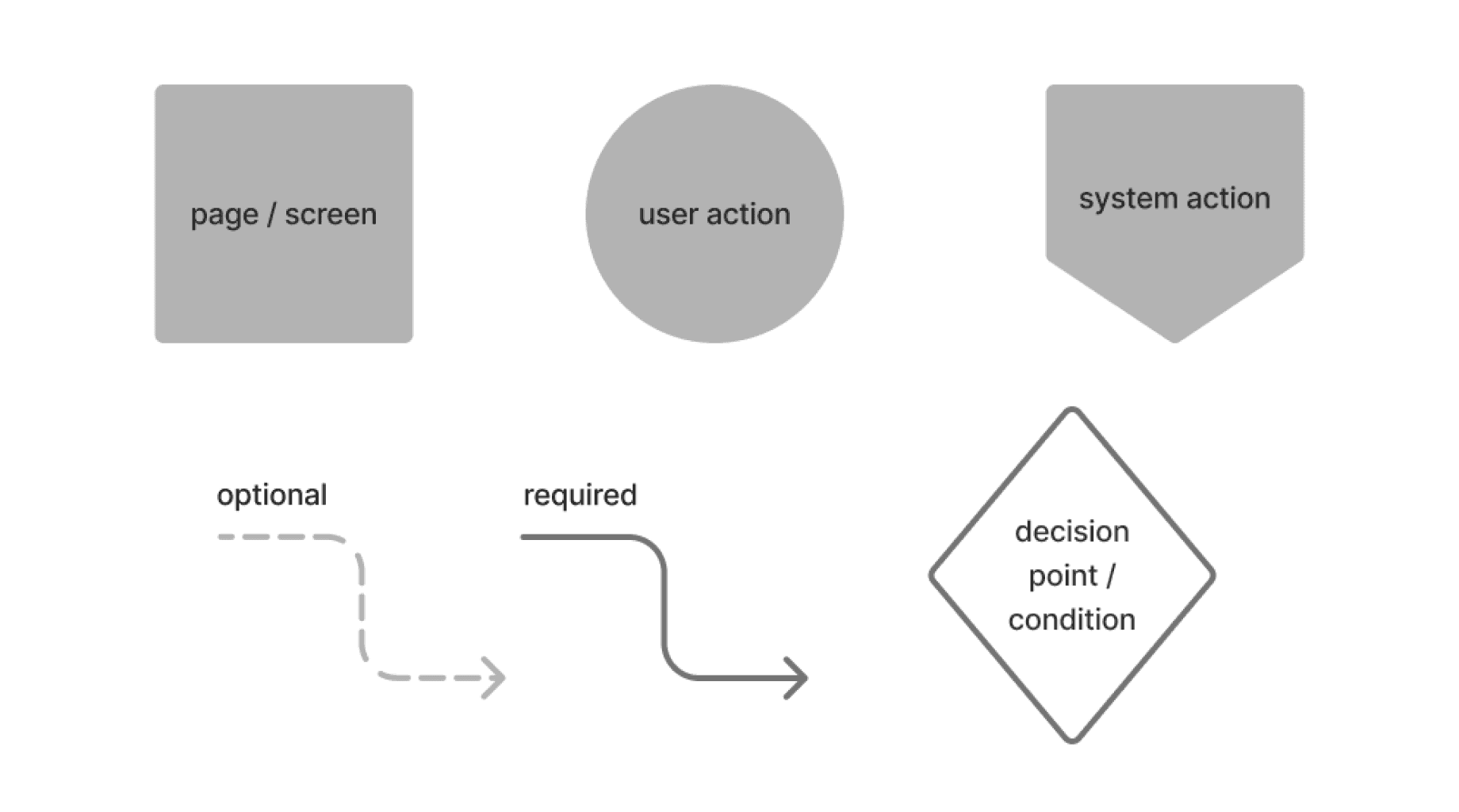
User flows

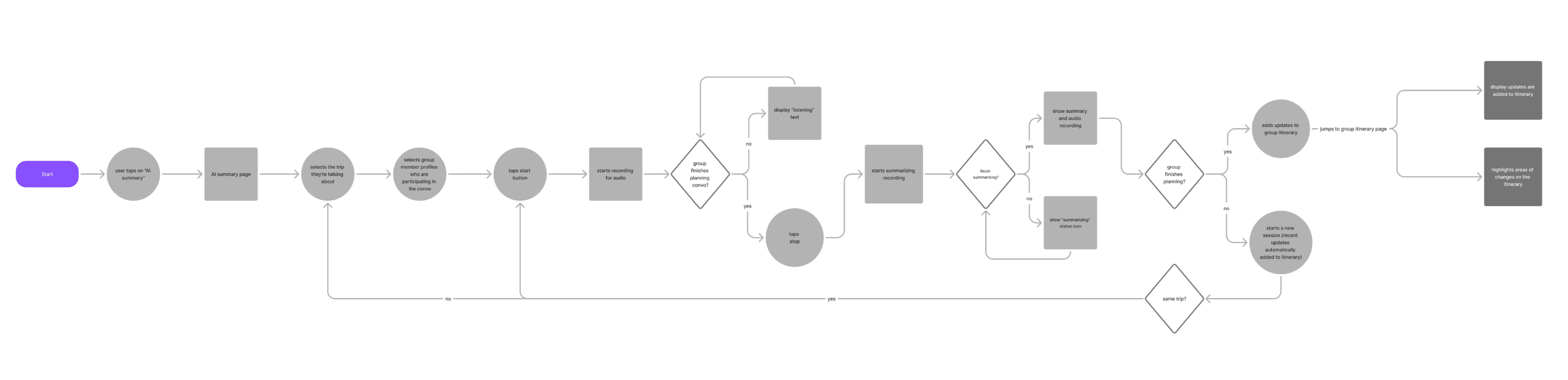
Live group planning summary

Finding group availability

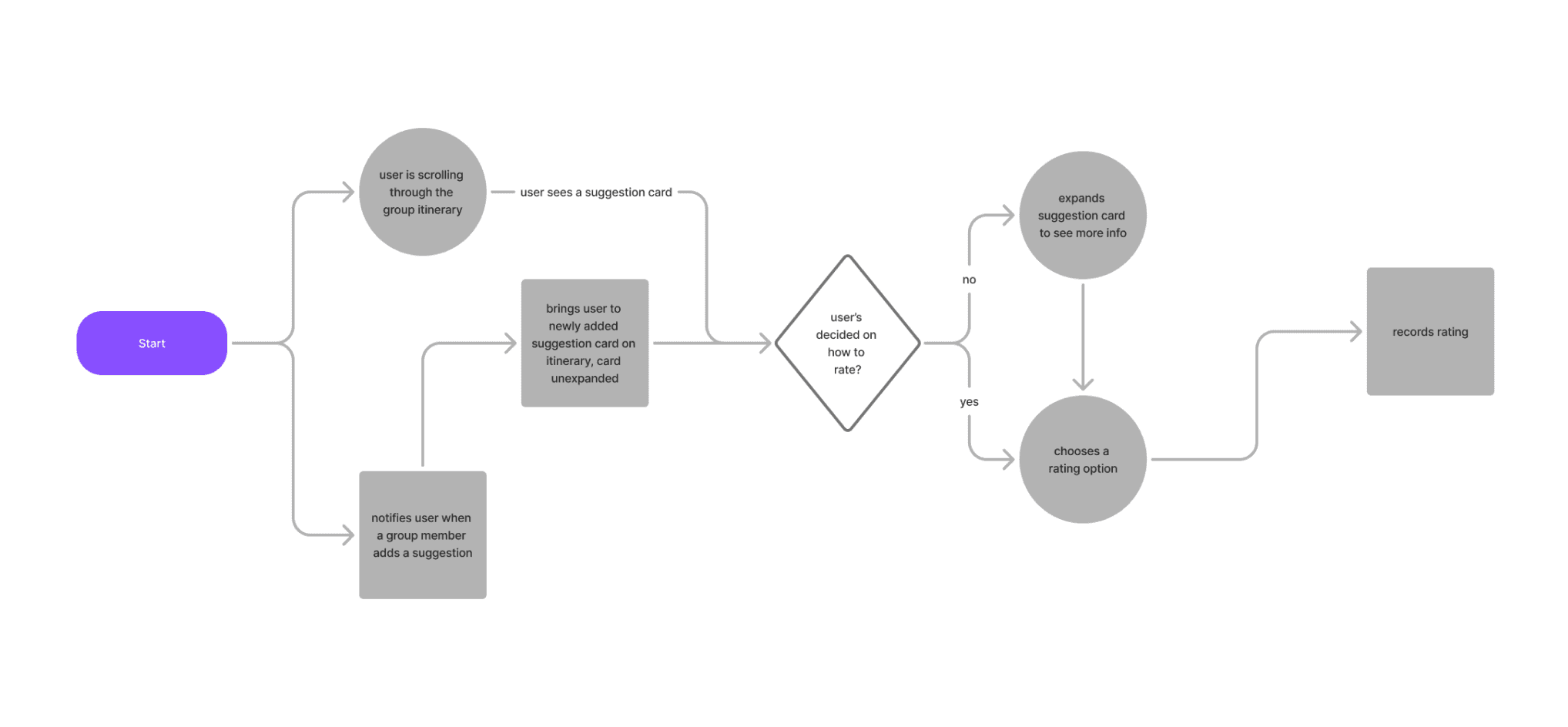
Rating a suggestion

Add a suggestion to group trip

Add a transportation route

Create a new group trip

UI deep dive

05

State exploration

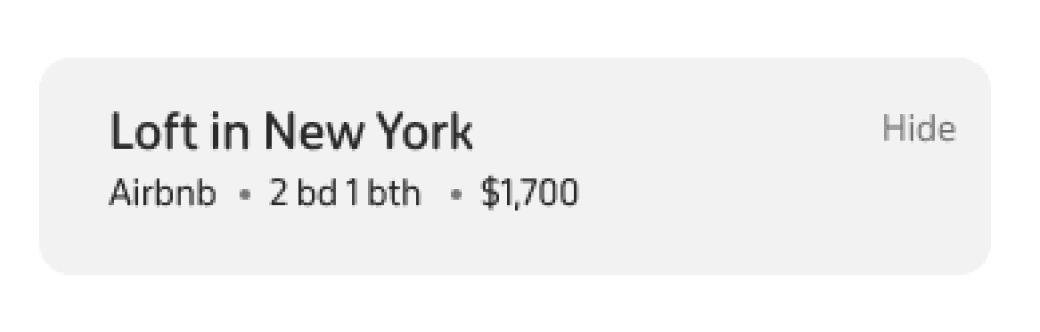
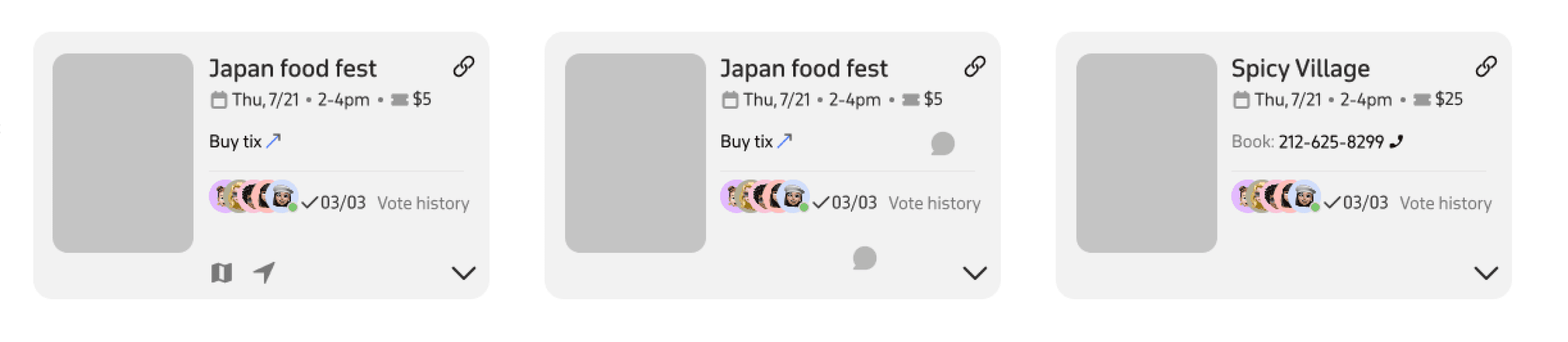
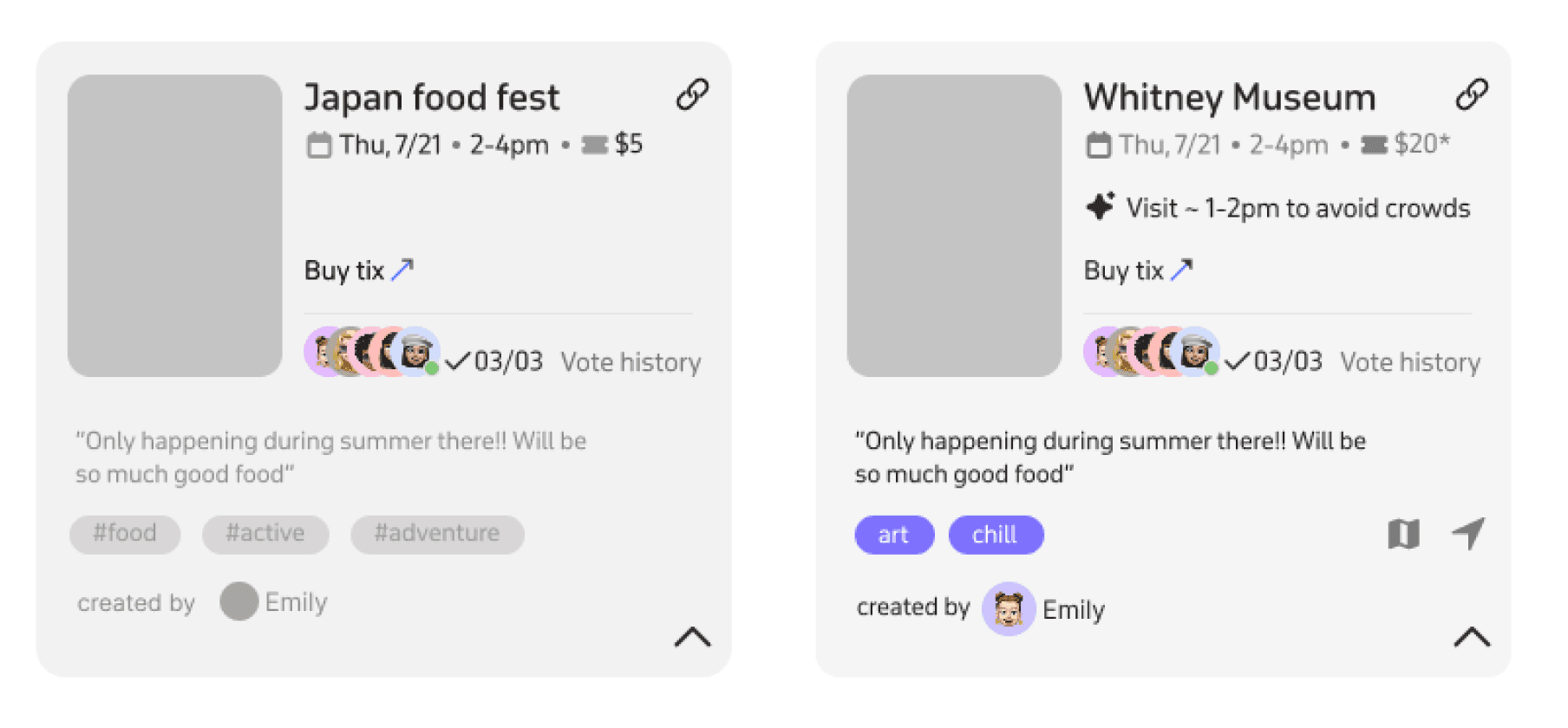
Fleshing out the difference between an activity suggestion card and a stay suggestion card. Within a suggestion card, what if it’s a restaurant? a ticketed activity? a non-ticketed activity? what would it look like expanded? or when the group finishes rating an activity?


Stay – Rate

Stay – Rated, not decided on

Activity – Rate

Activity – Finalized, compact view

Activity – Finalized, expanded view

Activity – Rating, expanded view

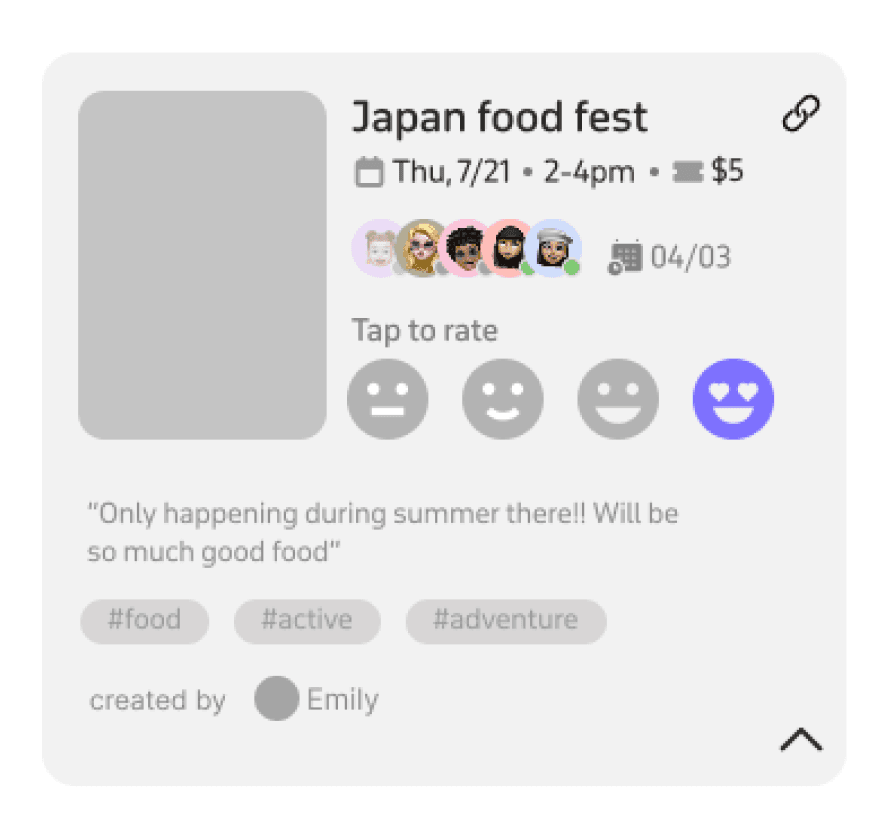
What’s the best way for someone to quickly tell their group how they feel about a suggested stay/activity? How do we visualize that action effectively, taking into consideration people’s feelings?

vs.

vs.

“Voting” vs. “Rating”

No one wants to be seen as a person who downvote or says no to another group member’s excitement. From my user research, people wanted to know other preferences and be able to decide as a group, so the experience should be about how you feel about an activity, rather than not letting that activity happen.

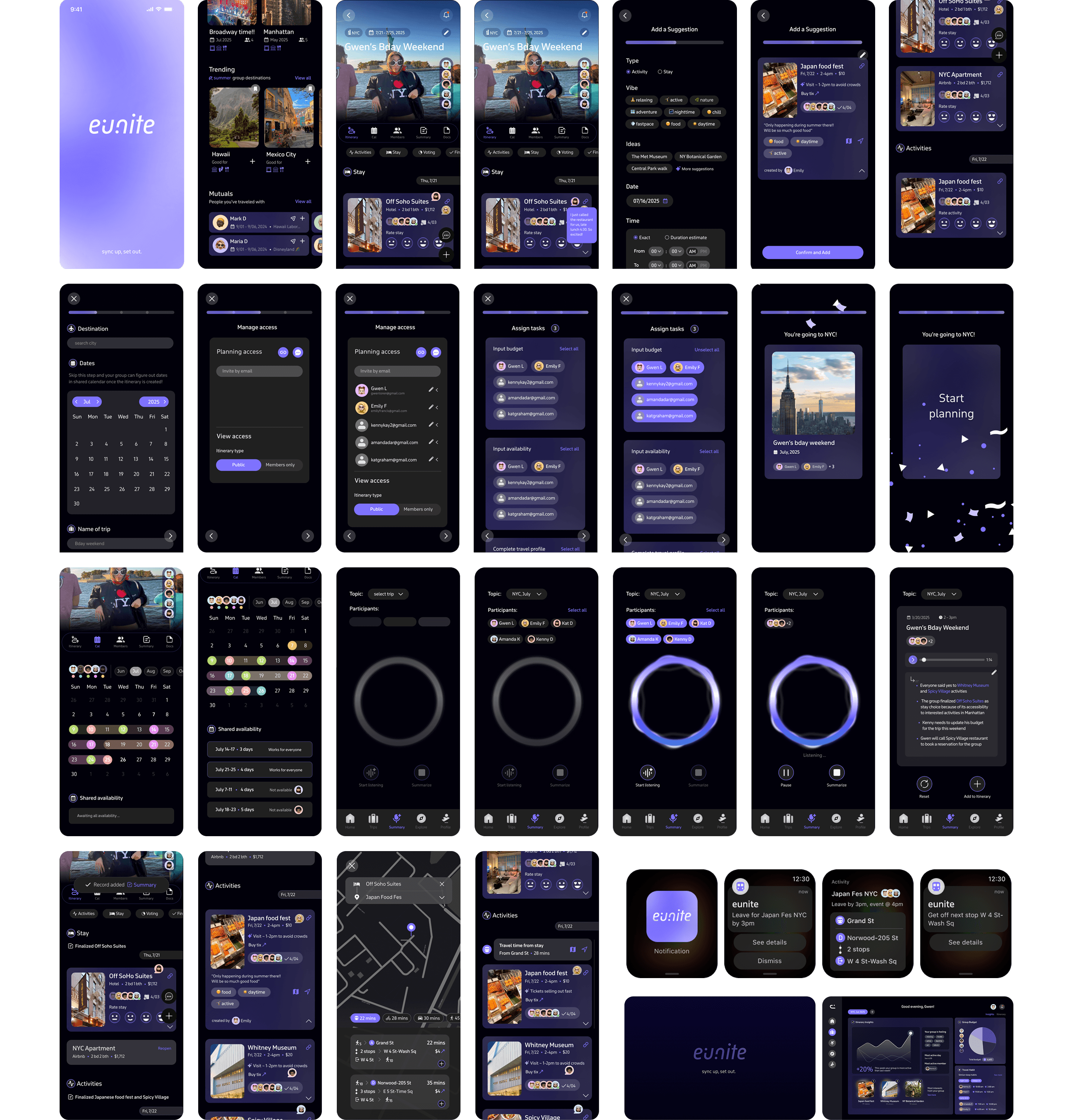
Screens

Mobile, watch and laptop

Next steps

06

User survey + test:

Test core flows with groups and get feedback:

Starting a new group itinerary.

Adding an activity / stay suggestion.

Rating an activity / stay suggestion.

Recording a live planning conversation and updating to itinerary.

Receiving an coming up activity alert on watch.

2025

Bri Mai

let's chat

bri@brimai.design

let's connect

linkedin