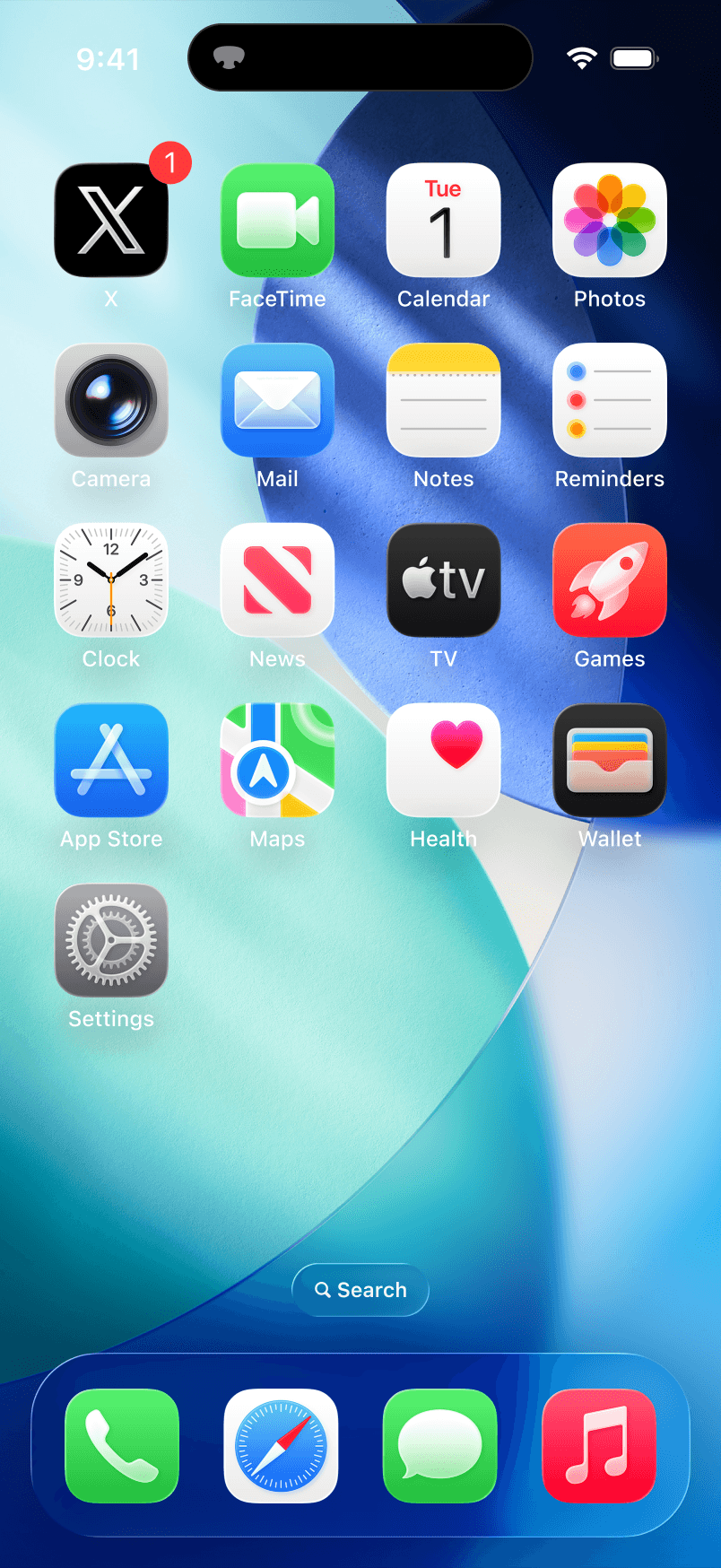
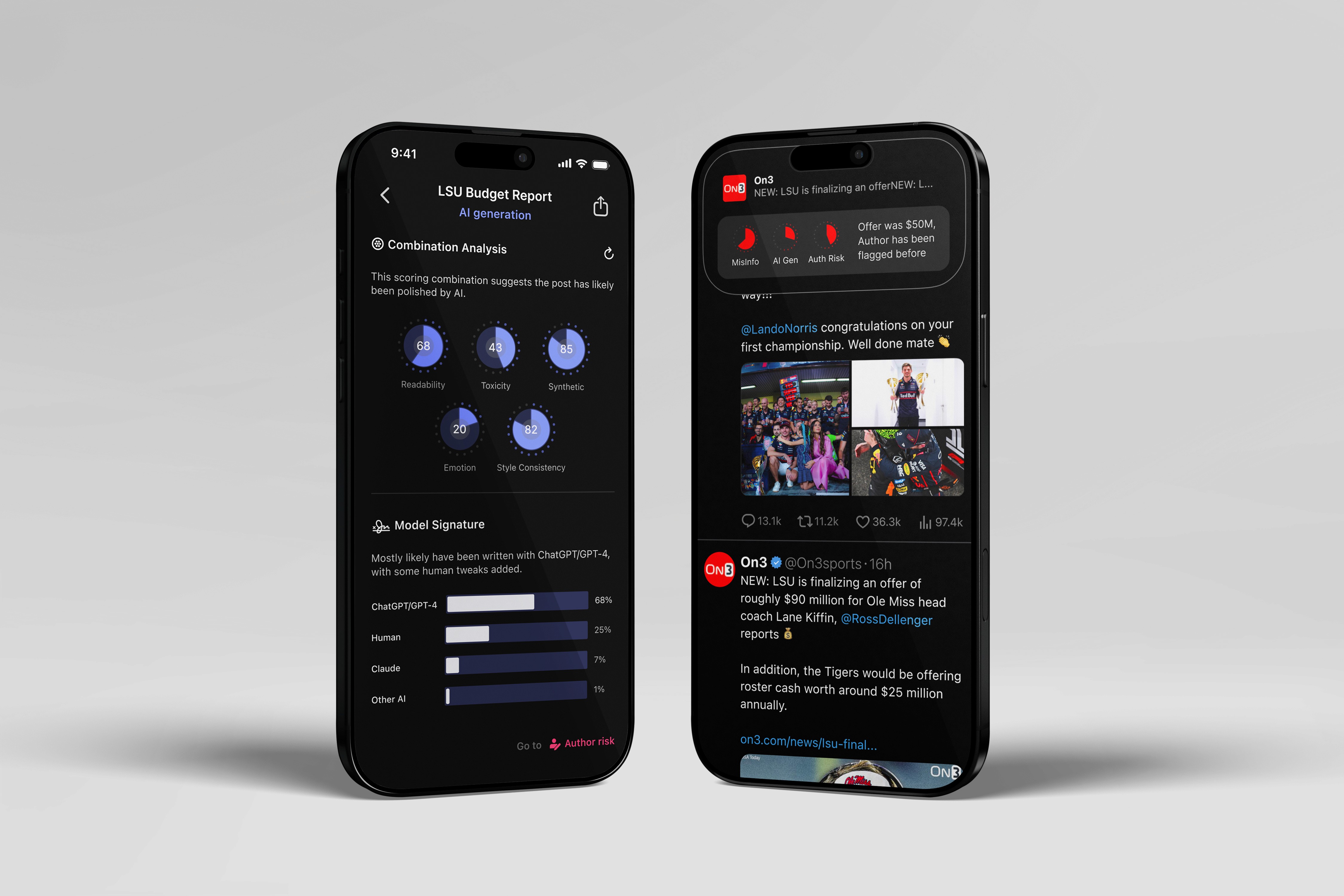
Social media is flooded with bots, AI-generated content, and misinformation — Sniffo helps you see through it. Scan any post or account and get instant alerts on misinformation, AI-generated content, and account-level risks. Stay informed, stay skeptical, and never get played by what's in your feed.
ArtCenter College of Design Course (Data Visualization).
Prototype, wireframes, data visualization explorations, marketing reel.
Script writing, Directing, Editing.
Figma, Davinci Resolve, Figjam.
Core Flows
01
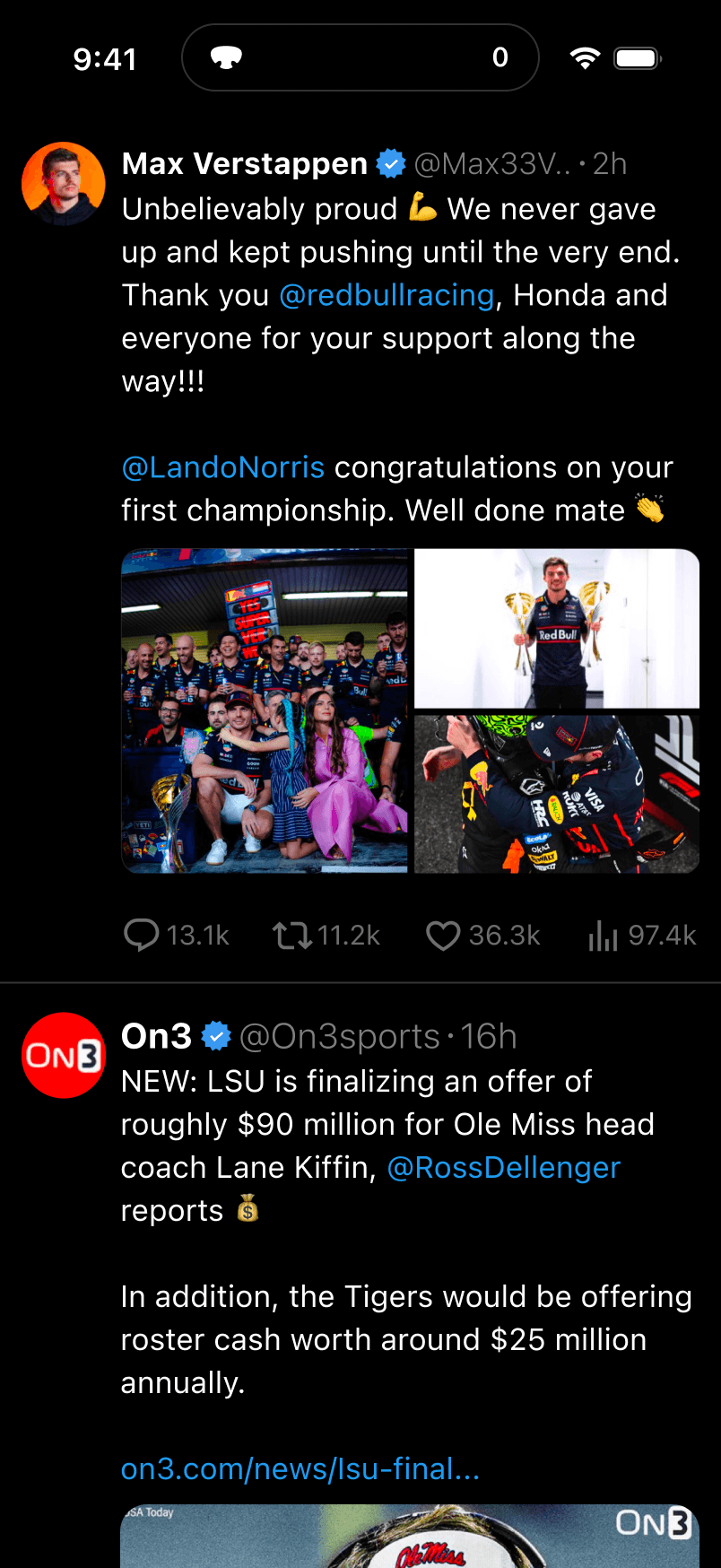
With a limited timeline, we designed for two most important use cases — quick scroll and extended phone session — in order to highlight Sniffo's value to users.
01
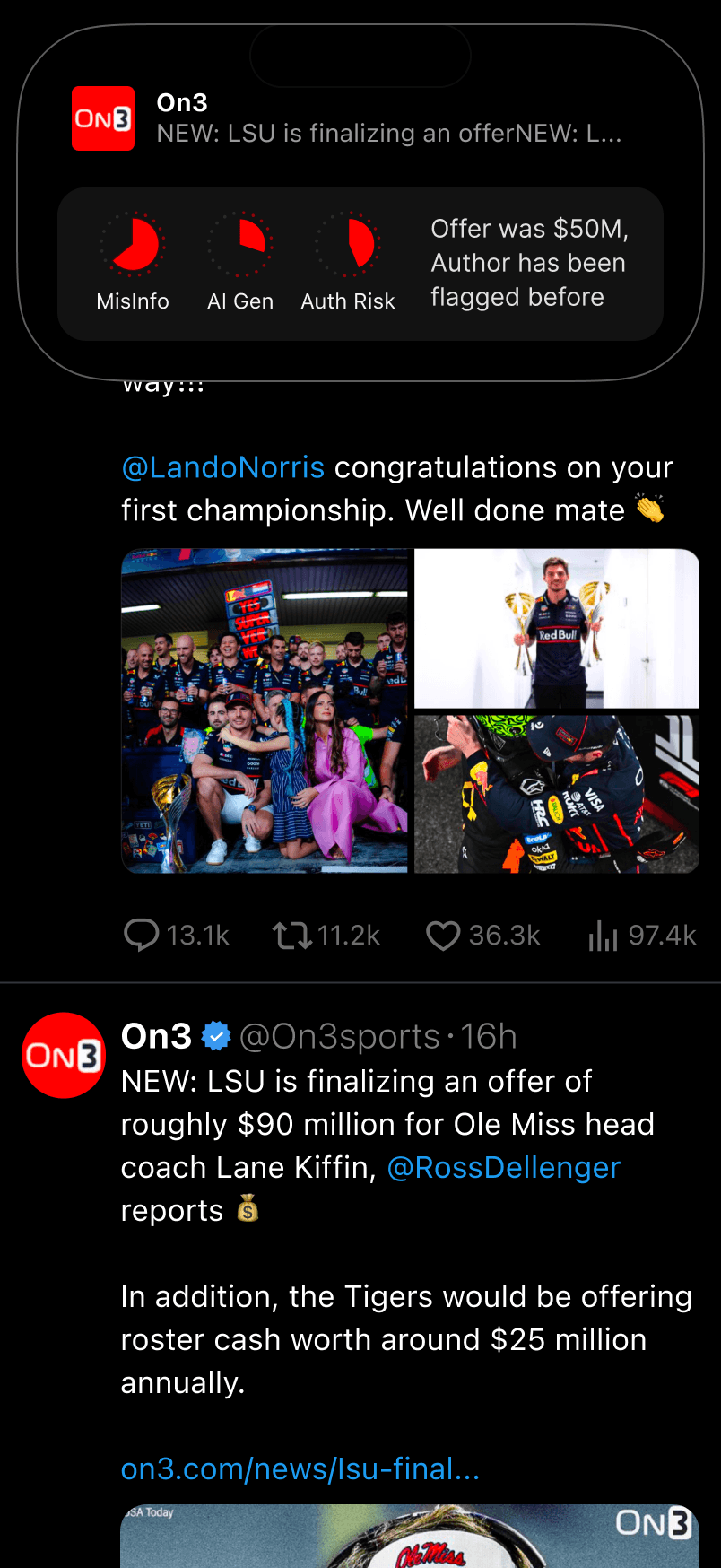
Sniffo scans and alerts during scroll through dynamic island.
02
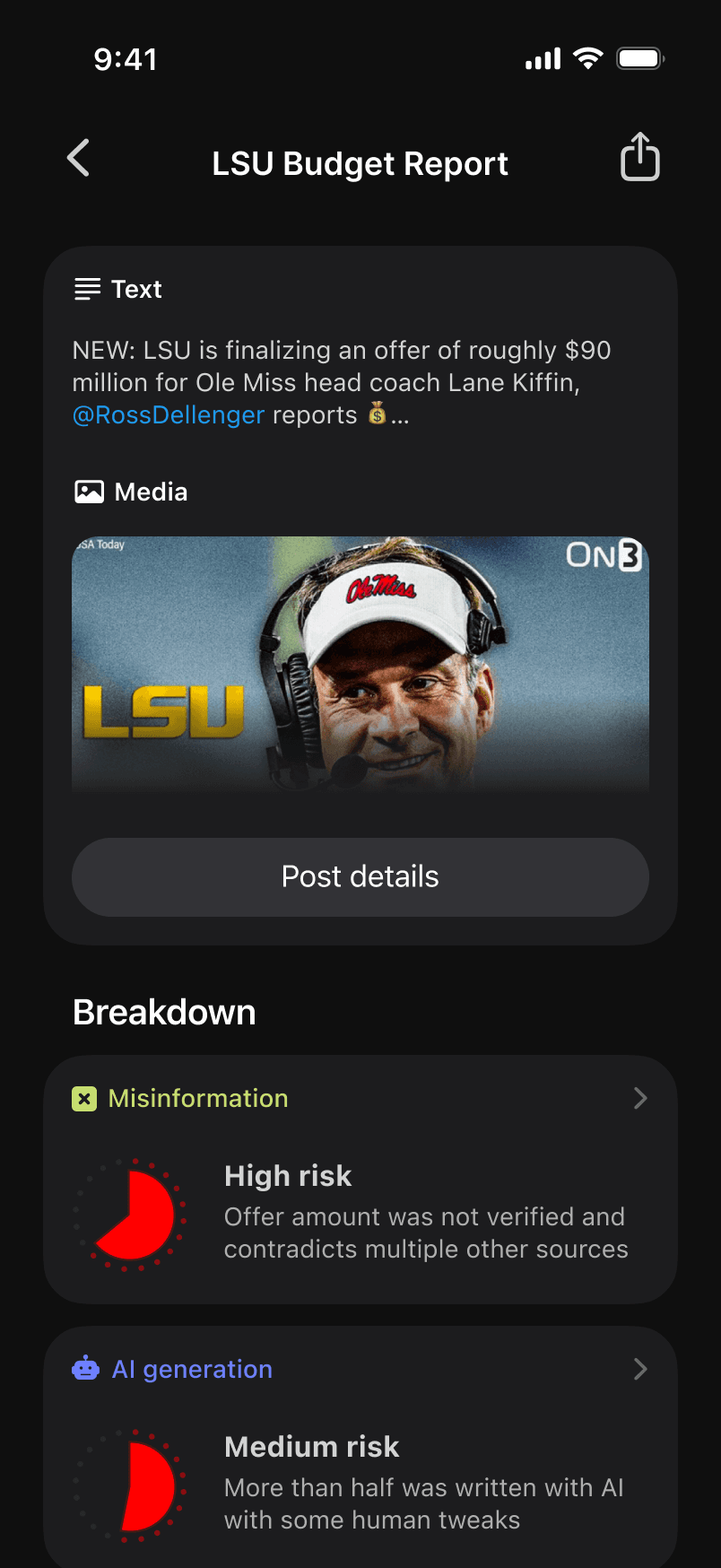
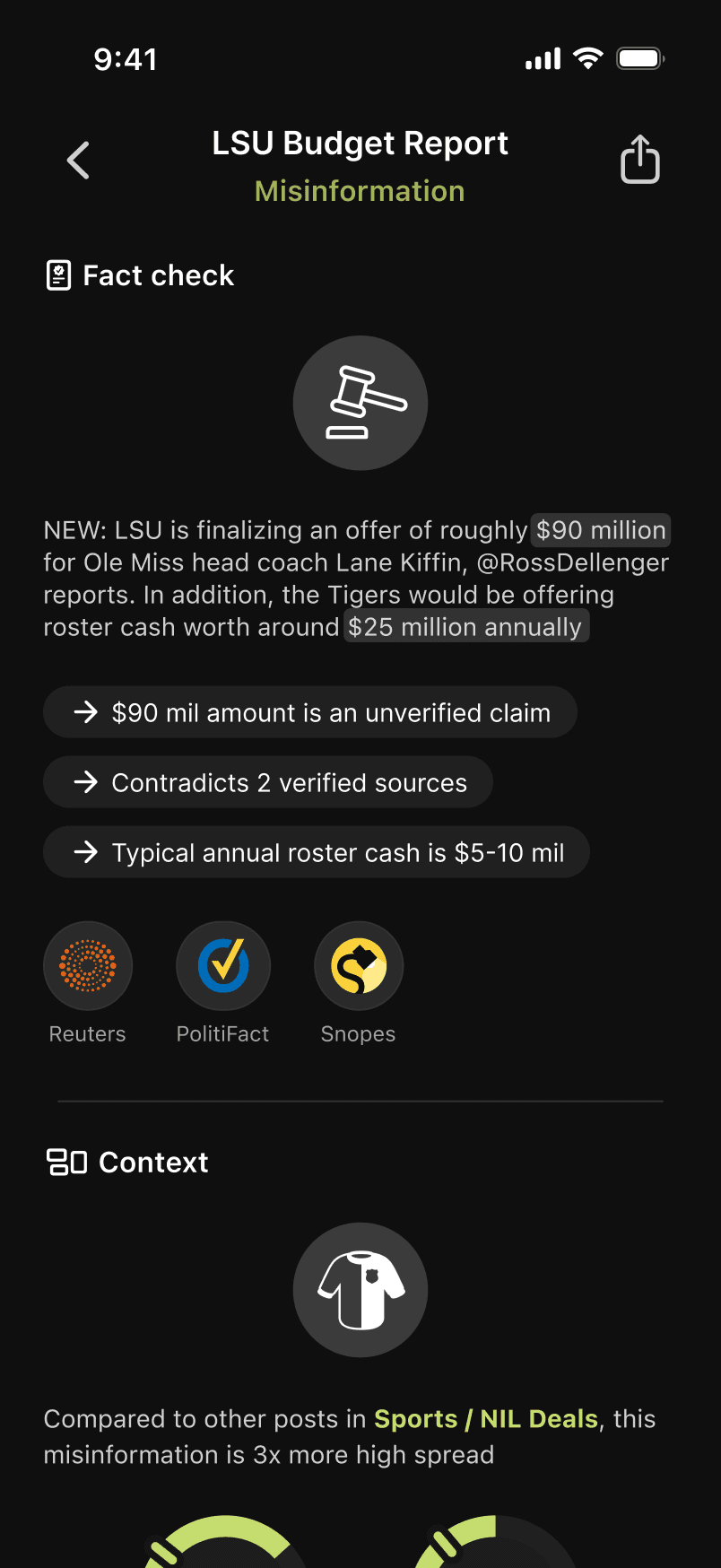
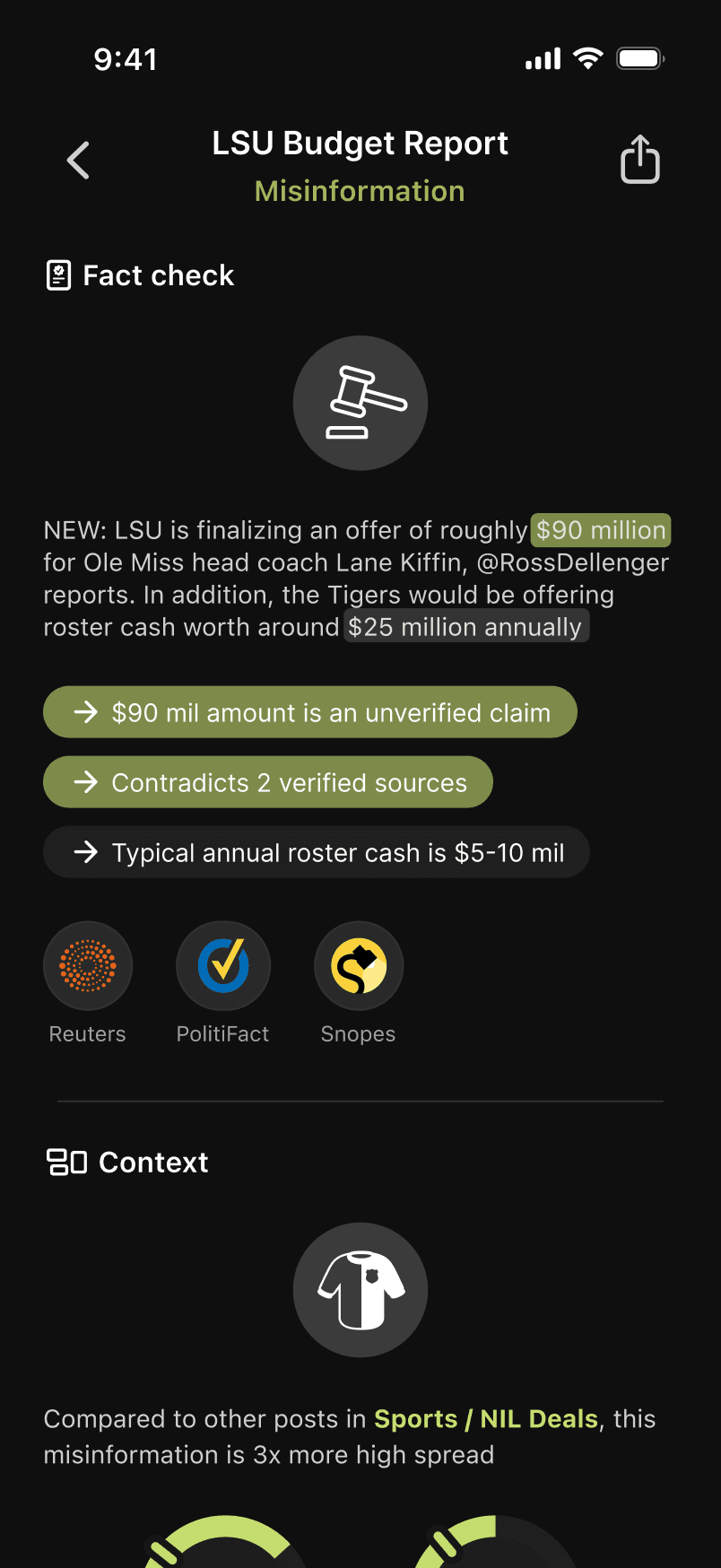
Sniffo's in-app interactive report on post's misinformation.
03
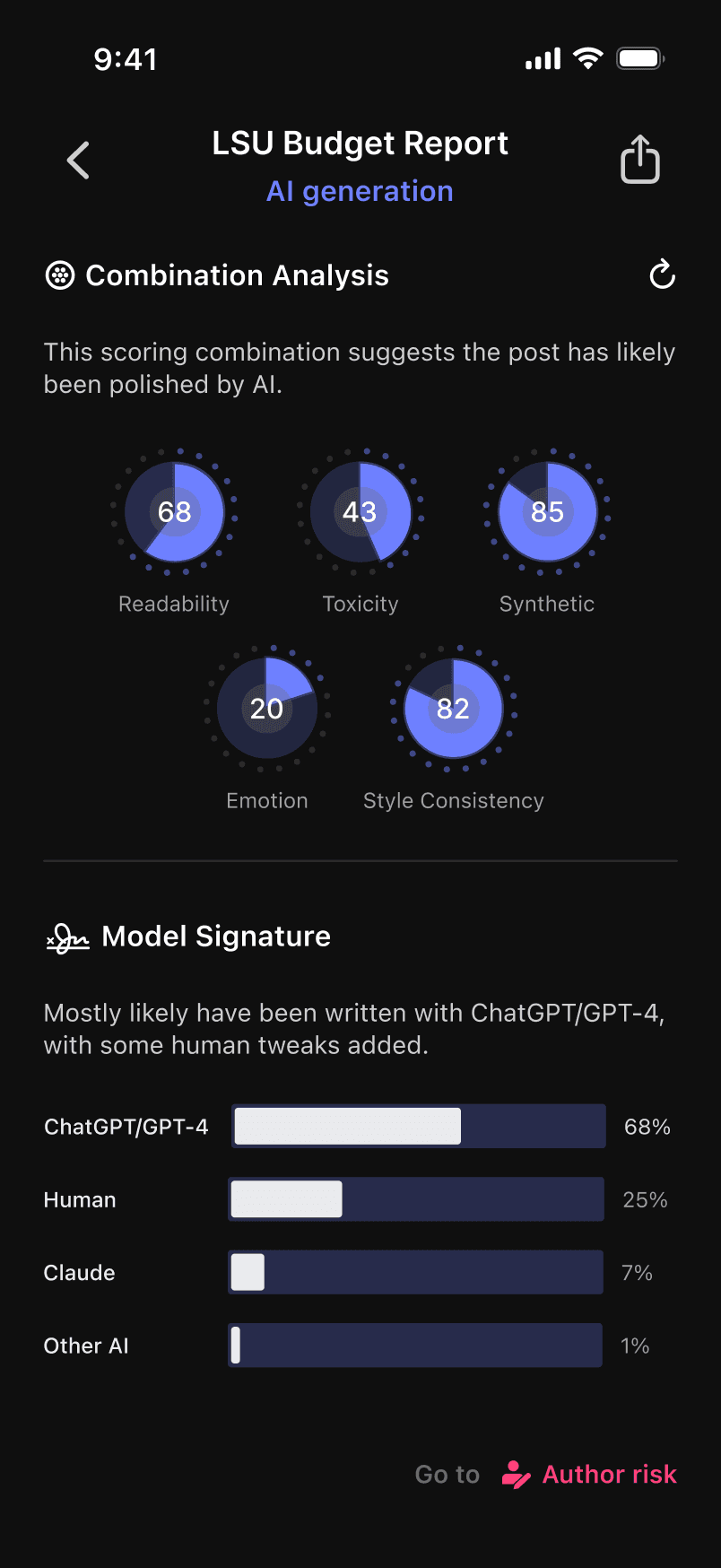
Sniffo's interactive analysis on post's AI generated content.
04
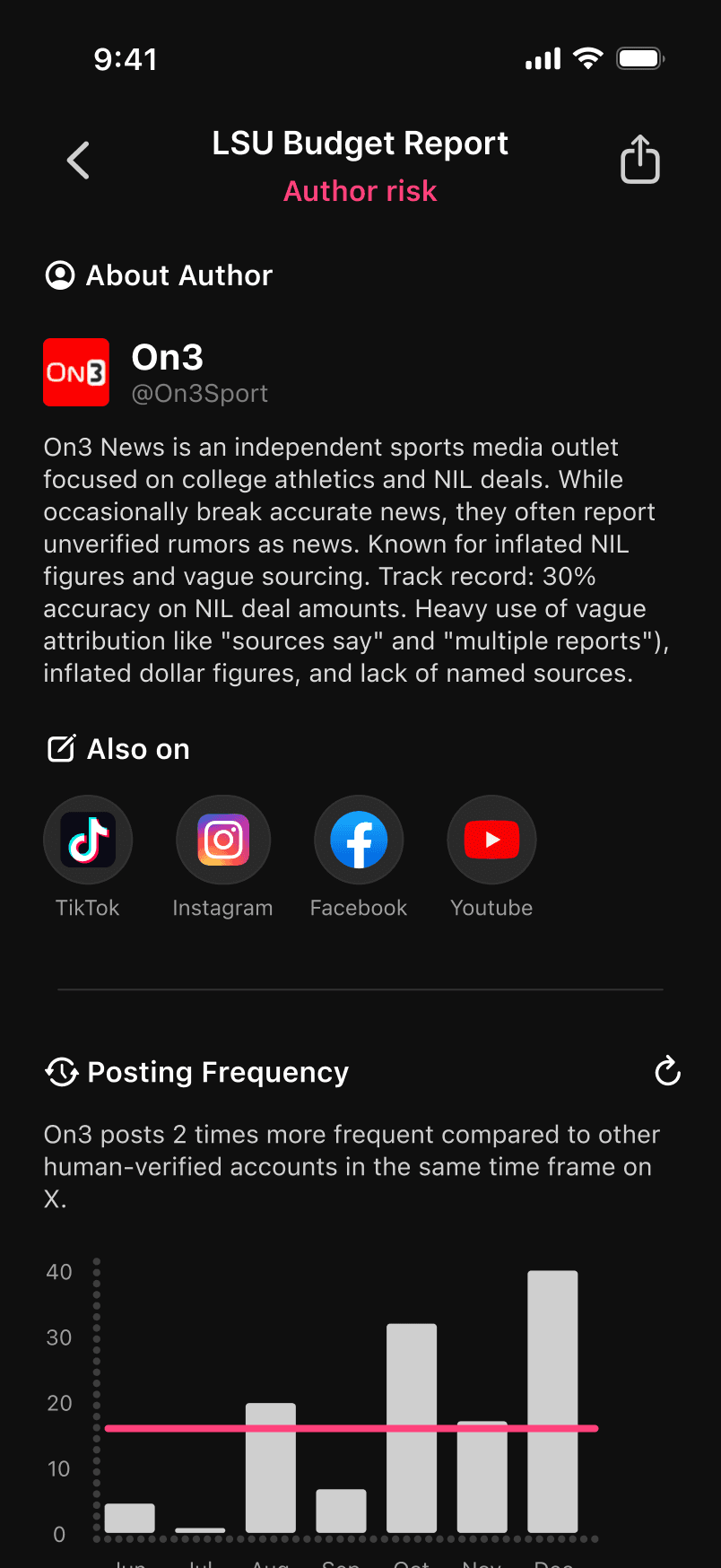
Sniffo analyzes account risk based on past posting behavior.

Quick scroll – short time and attention
Only notified when a post is suspicious
Quickly sees key result
Not burdened to keep track of or save results

Extended phone session – short time & attention
Opportunity to explore deeper post analysis
Gets insights from tool
Space to think and draw own conclusions
Product marketing video to communicate Sniffo's value by showing user in a real-life scenario using the app (Sniffo is not on App Store or Google Play).
UI Highlights
02
Dynamic island
Non-intrusive to user’s scrolling flow
Lightweight cognitive load
Low to no learning curve
User can choose to keep scrolling or go to app detailed report
Every “sniffing” result is saved automatically in the Sniffo app
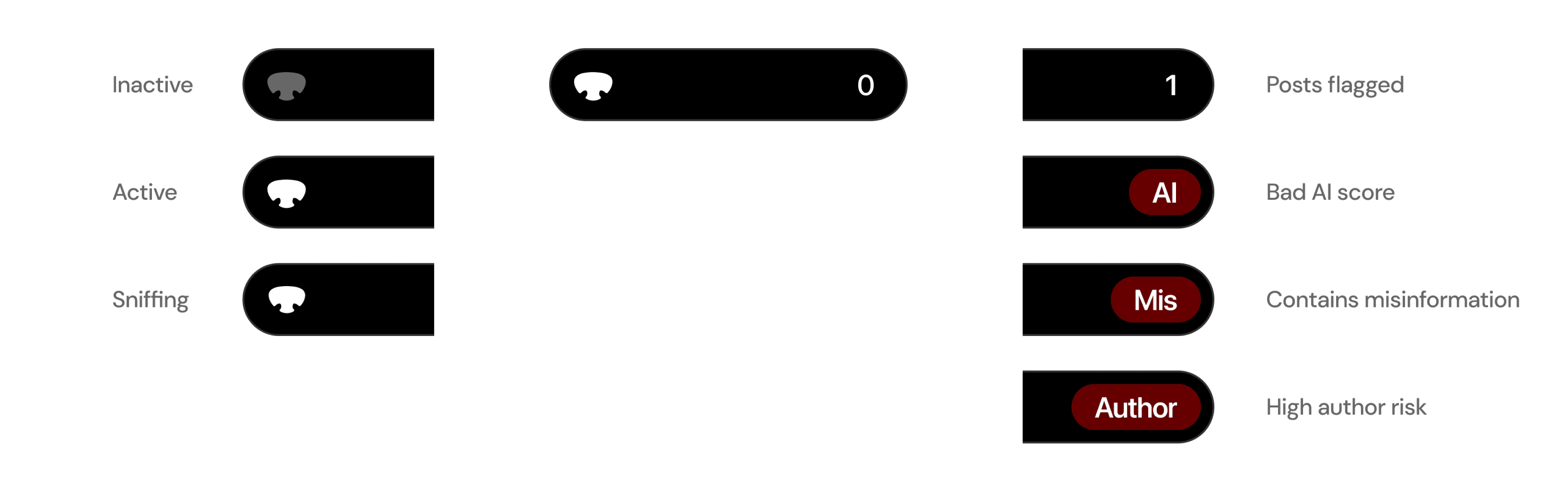
Icon / app activity states in compacted dynamic island
Interaction highlights
Process
03
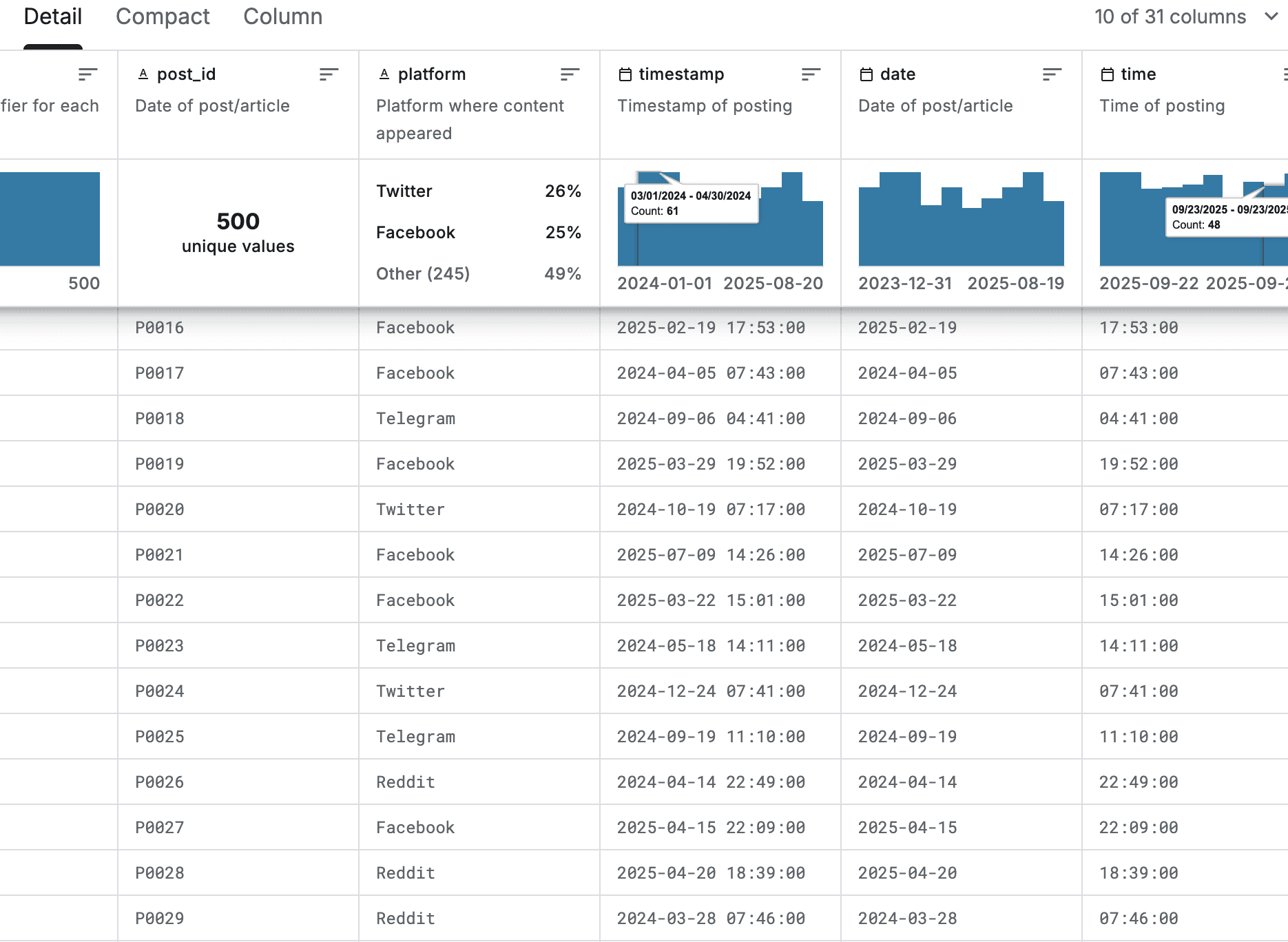
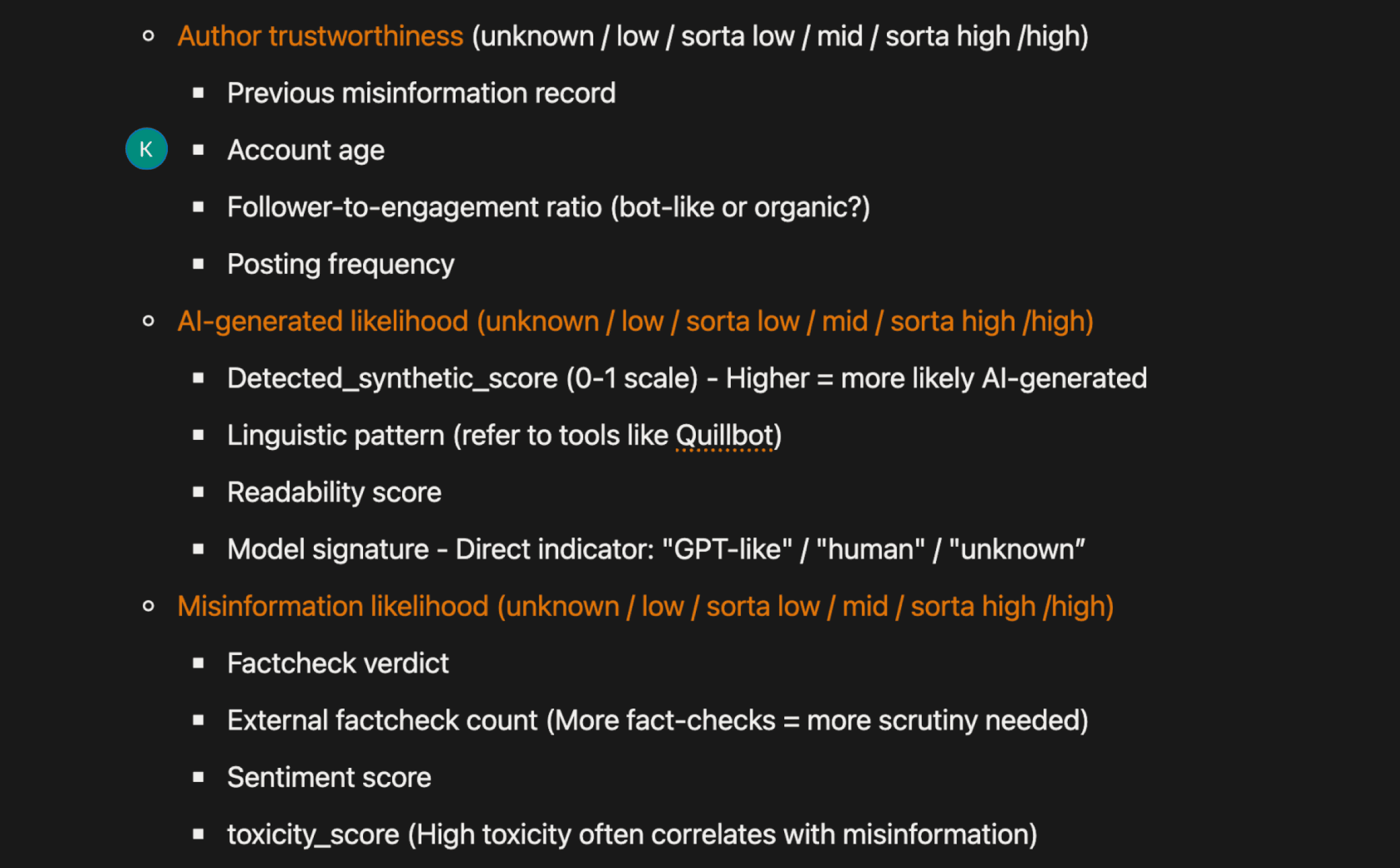
I found a dataset that captured “realistic simulations of news articles and social media posts circulating between 2024–2025, labeled for potential AI-generated misinformation.”
Ideation
1
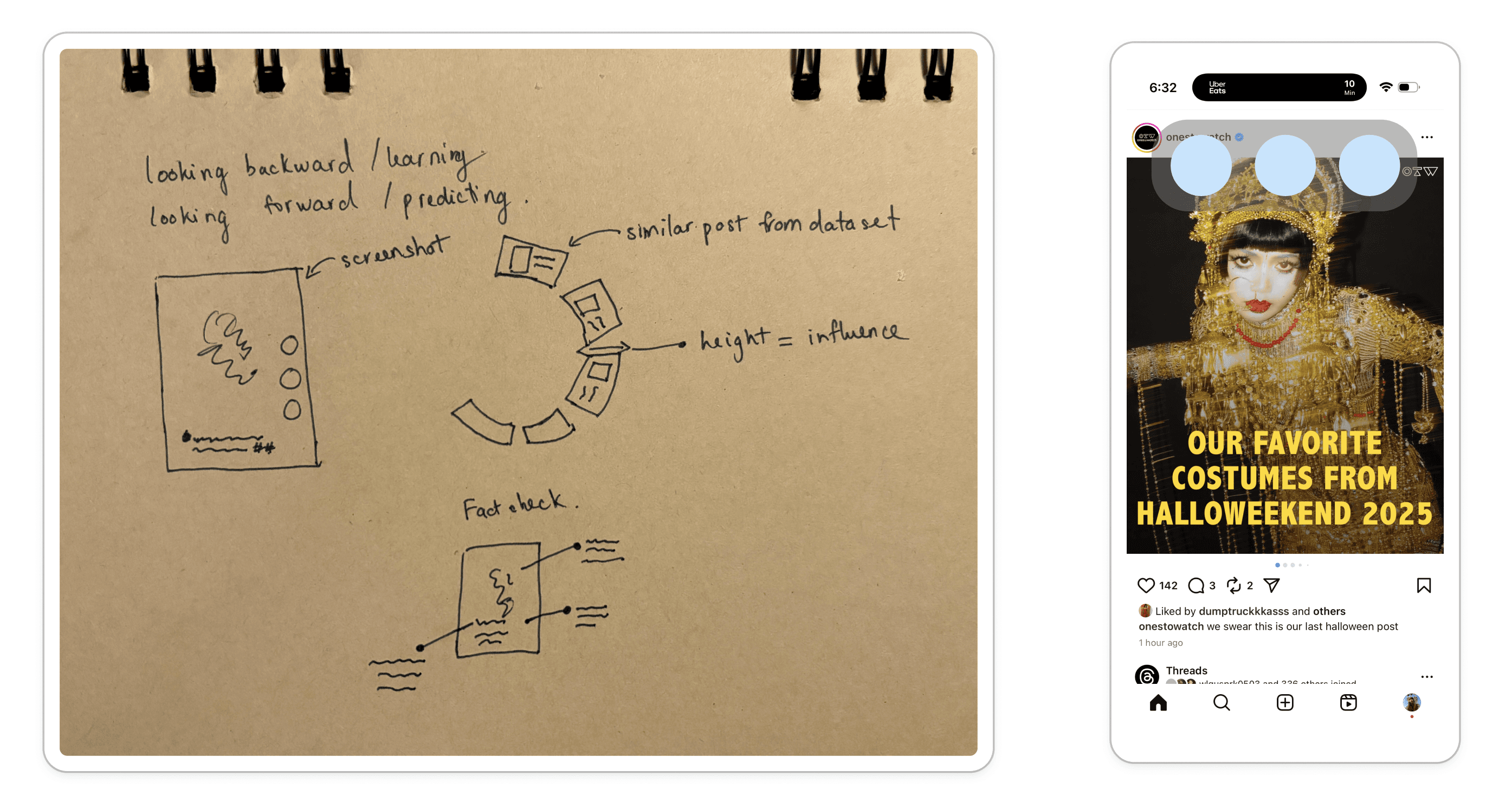
How can the detection tool fit seamlessly into the established interaction pattern and mental model of casual and doom scrolling?
2
How can we integrate branding so this highly technical and cold tool become something an everyday user can see themselves using?
3
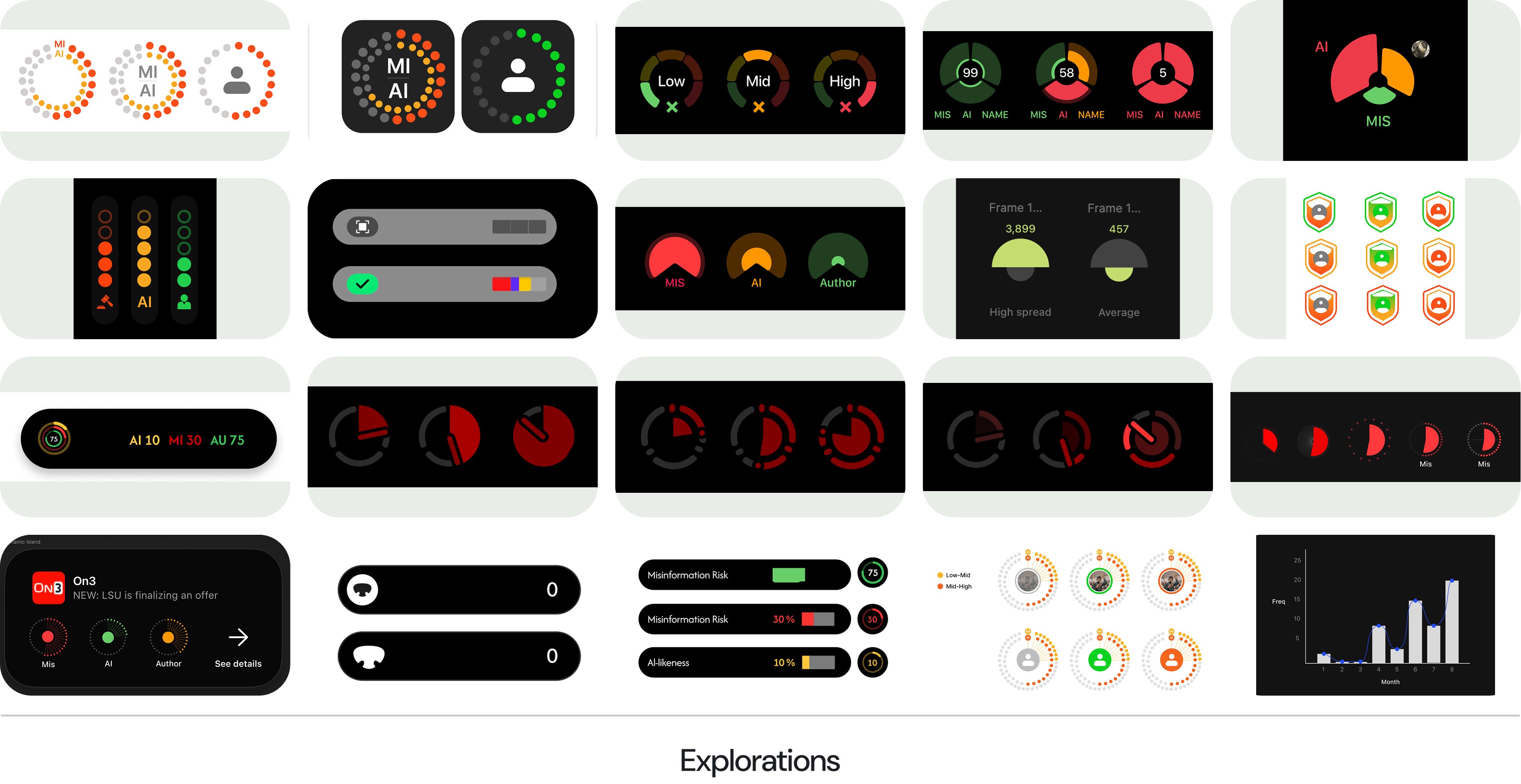
How can we utilize data visualization to pull attention, increase readability, and provide insightful interactions?
Screens